Category: Essays
We Make the Road by Walking
Roads, as we know them today, are common necessities. These manicured paths we traverse day-in and day-out have become public infrastructure that allow societies and culture to grow and thrive throughout the world.
While trade routes and migratory paths existed as early as 5000 BC, the Romans are credited for dramatically improving road technology. In order to move armies quickly and efficiently in their conquest of the known world, Roman roads were made from deep beds of layered crushed stone to ensure smooth and dry wheeled chariot travel.
The rest, as they say, is history.
Roads now guide us as we travel around the world. It’s become second nature for us. Roads lead us to knowledge institutions like museums and libraries. They lead us to business ventures and recreational activities alike. Their benefits are analogous to a real-world internet that facilitates analog connections between people and places. Roads, alongside the advent paper, have perhaps done more to support the democratization and dissemination of ideas throughout physical space than any other technological development in history.
In a practical sense, roads are awesome. We wouldn’t be where we are as a global culture without them. Metaphorically, however, and in the context of the modern technology landscape, I think the concept a road or a predetermined path that connects point A and point B deserves some examination.
Computer scientist Bran Ferren is noted for saying:
Technology is the stuff that doesn’t work yet.
I love this quote. Scaling Ferren’s thesis out a bit, we can infer that technologists are the beating hearts that take the stuff that doesn’t work yet to a place of functional distinction. Through passion, obsession and an inherent need to make, technologists dedicate their lives to building things that impact our lives. Software and hardware often get the glory, but let us not forget that human spirit and ingenuity have tread the ground leading to these palaces of pixels.
As Ferren’s quote implies, the most compelling technology projects solve new problems, often in surprising and exquisitely considered ways. Creative technologists regularly need to be transported to a place existing roads won’t take them.
When it comes to true innovation, there is no city grid. Google Maps won’t help you. Macadam turns to asphalt turns to gravel turns to dirt turns to lush old growth. Instead of following existing roadmaps, we are required to forge new paths. We reverse engineer our future. And as our feet fall from common trails, we press our soles into the new fresh earth. Quicksand and jagger bushes be damned.
Turn off your GPS. Disable location services. Carry a machete. Take a step. Then take another. And then one more.
We make the road by walking.
The Untethering
The internet is intentionally pervasive. His far-reaching tentacles evolved through Darwinian-like design. The internet is also persistent. He is ubiquitous, pwned by no one. He is everywhere. All the time.
The network will not apologize. The network is proud of this persistence. This ubiquity. He’s earned it.
These traits are what make the web beautiful. By and large, they’re why pixel workers like us do what we do, day in, day out. We carry meaning forward through ones and zeros to communities at scale. Seven billion potential participants interacting with the things we make. All the world’s knowledge, democratized and in our pockets.
But in the face of all the internet’s promise and charm, do you ever dream about giving it all up? Walking away for good? Finally and forever, severing the digital tether?
I do.
Every single day.
Some people dream about winning the lottery. Putting cash money in the bank. Others long for a perpetual vacation on a tropical island. Sand between their toes. An umbrella delicately placed in their cocktail.
Not me.
I daydream of awkward silences and unbroken eye contact. I dream of focus and undivided attention. My thoughts fix on being unreachable and independent, and fully in the moment with the people I’m with.
However, the network commands constant attention. He pings, we check.
I want less real-time, more real time. I want to be here. Right now.
I want to make things with my hands, things that last and have a tactile presence in the world. Things with physicality. Things that take up space. Does it ever bother you that so much of what we labor so hard to make in the digital space is so fleeting, swept away like sand under the waves of browser updates, new operating systems, and software versioning?
The network is proud of this progression and is unforgiving. As he consumes his previous self to sustain his future iterations, we’re left with one choice: Jump on or get left behind run over.
Sometimes I dream of letting go and allowing him to crush me under the weight of his pixels.
In this fantasy, I’m standing still and alone in a swirling digital vortex. I am in the eye and I am calm. Around me swirls the madness of our omnipresent digital fabric. Hexidecimals, source code, selfies, ping, emoji, uploads, likes, ping, navigation menus, status updates, browser widths, ping, downloads, emails, WiFi connections, analytics, ping, retina screens, ping, that goddamn watch, ping, tweets, git push, ping. Faster, louder, swirling all around my still frame. Eyes closed, teeth clenched. Faster, louder. I am still. Swirling. Dizzy. Disorienting. I am still. Ballooning with every rotation until one final pixelated, glitchy gasp.
Ping.
And there I stand. Still. Calm. Enveloped in silence. I am alone in the quiet calm of the disconnected dawn. No longer a statue. No longer paralyzed by persistence, I take a step.
I am finally and forever untethered.
We Hacked an Amiga 1000
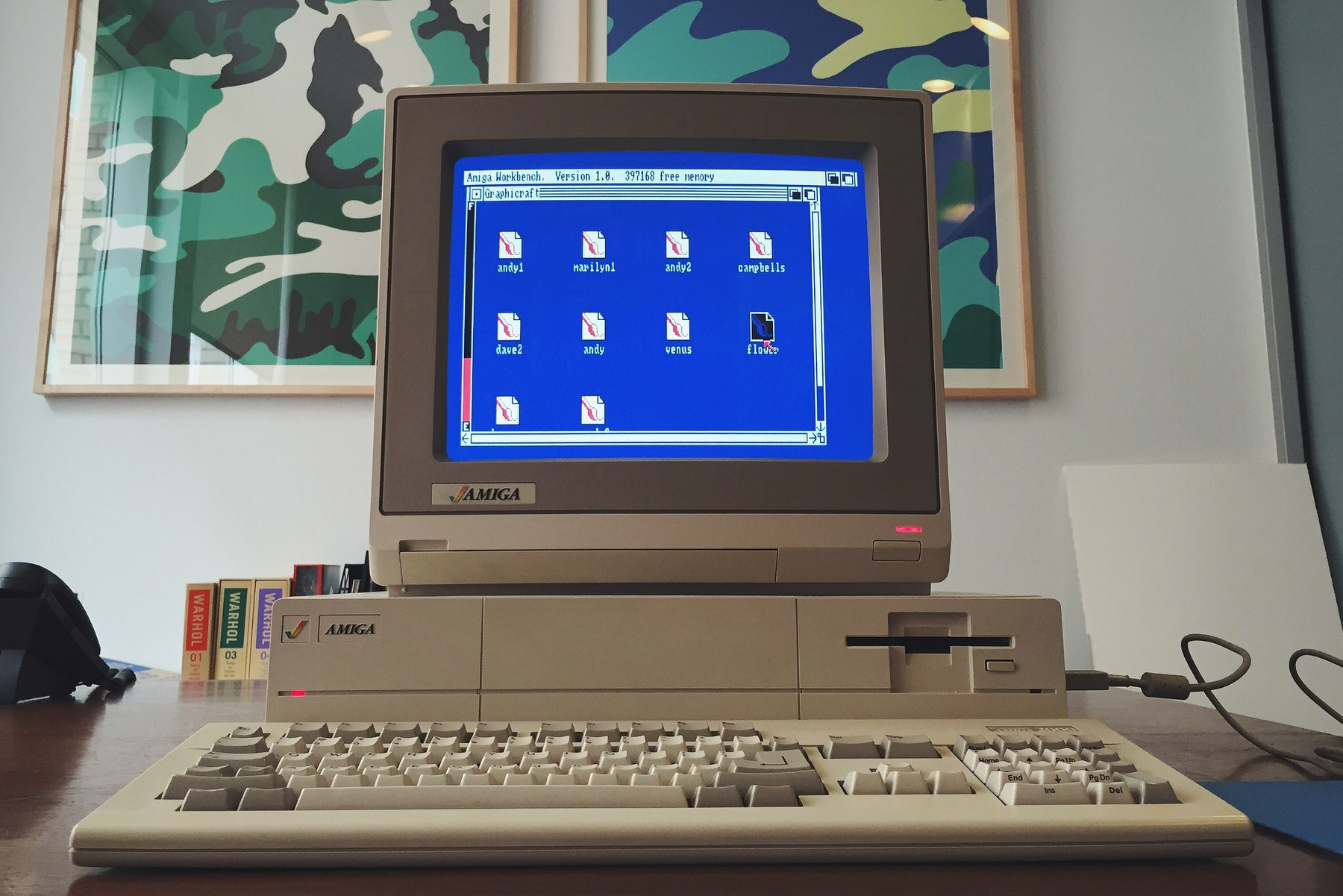
I’ve been so busy at work and home that I completely forgot to post about a cool project we shipped at the museum last week. We hacked an Amiga 1000 and are letting visitors use it to explore some of Warhol’s digital experiments created with the device in the 1980s.
Me, over on the museum blog:
The shell and innards have been modified to allow for constant, ongoing usage, but all the 1980s details remain. The mouse is jumpy and doesn’t track tightly, and the files open much slower than we’re accustomed to these days, but the authenticity of the operating experience goes a long way in conveying the blunt, primitive nature of the digital tools available for artists at the time.
This was such a cool project to work on.
Not Content with Content
Earlier this week at work, we published (and effectively open-sourced) a digital strategy that will guide us for the next several years. I wrote about it on the museum’s blog and if you’re into this kind of nerdy stuff, I’d love to hear your thoughts.
Shortly after we made the strategy public, I stumbled upon a tweet by the brilliant Seb Chan:
I get sad when museums talk about all their stuff as ‘content’. — Seb Chan (@sebchan) March 31, 2015
I’ve never liked the word ‘content’ and I always feel a bit icky when I hear marketers fling it about. Seb is completely right. The word doesn’t do museum missions justice and it cheapens the integrity of our subject matter. Sure enough though, there it was littered throughout sections of our strategy used to describe the museum’s varied objects and narratives.
Since the strategy was open-sourced on Github, I promptly filed an issue ticket and started discussing language alterations with my team. Everyone agreed that an edit was appropriate. A few minutes later, I pushed an update to the repo. We now refer to our objects, media and ephemera with more meaningful language.
This is a really great example of how operating openly and transparently can positively impact institutional philosophy. This minor modification made our approach much stronger. I hope we push more changes like this in the future and when I look back on the versioned repo a few years from now, I’ll be able to see a comprehensive record of how our approach evolved over time.
Death of the Art Museum?
In an op-ed piece in the Pittsburgh Tribune-Review published last week, cartoonist, pundit and former director of the Toonseum Joe Wos attempts to tackle the topic of technology’s impact on the museum experience. In Death of the Art Museum?, a markedly uninformed Wos asserts:
Art is an important part of society. But museums to house it might no longer be needed. Art museums are a holdover from an elitist, patriarchal society that force-fed us hand-picked culture. They are becoming discarded relics of the past, much like encyclopedias, phone books and Bill Cosby’s career.
He continues:
Only a handful of high-profile art museums — such as the Met, Smithsonian and Louvre — are thriving. That’s because they package themselves as “must-see” attractions, serving tourists as backdrops for cultural selfies.
To those of us who work in the #musetech field, the article regurgitates many of the antiquated arguments we’re used to confronting, however this piece lacks even the slightest trace of research or factual support. I suggest you take a few minutes to read the whole thing.
Outside of the author’s baseless assertions and lack of evidence to support the claims thrown around within the piece, there has been some constructive dialogue emerging from the article:
- Carnegie Museums of Pittsburgh President Jo Ellen Parker responds to Joe Wos
- WESA-FM airs an hour-long discussion on the topic of museums + technology
- Judy O’Toole and Charlie Humphrey respond to Joe Wos
- Koven Smith gets in on the action
Wow. Pittsburgh is talking openly about museums and technology! Even though his article is completely off-base, I’d personally like to thank Mr. Wos for starting this discussion. Anytime the topic of #musetech transcends specialty blogs like this one and makes a splash within mainstream conventional media, especially here in Pittsburgh, it’s a good thing. I hope the conversation continues.
A Mission and a Marker
I’ve been writing and developing Static Made three years this month. Before that, I was publishing a less-focused personal blog. And before that, I had a fairly-well-read lefty political site. If we go all the way back, a Geocities page for emo show reviews got the whole thing rolling for me.
When I stop and really think about it, I’ve been making stuff for the internet my entire adult life. Lately it’s art + tech projects or blog posts, but at times it’s been music, video or political opinion. I guess this is natural for creators — evolving, shifting, moving forward.
People always ask me, when such great off-the-shelf tools exist for internet creators, why I continue to put so much time and attention into a freestanding personal website. I then typically launch into a diatribe about how it’s important that we participate in the open web and publish content that’s independent of platform-specific silos. And while that’s part of the reason, it’s not completely true.
The real reason I do this is because no one else will. This site is an extension of me. If I want the logo shifted over 5 pixels, I’ll do it. If I grow tired of the color pallette, I’ll change it. If I want to blow the whole thing up and start over, I can and I have. If I want to publish a piece no one will read about my motives behind making this site, there’s no one stopping me.
Dave Winer believes a good blog exists independently of people reading it. I agree. Readers are important, and I certainly appreciate each and every one of you who reads this site, but I’d continue to write if the Static Made readership vanished overnight.
My objective here has nothing to do with what happens after I’ve published. It’s about the creative process. My mission with this website is to create a place where I can grow artistically and professionally; workshop some crazy thoughts in varying states of undress, and leave a semi-permanent marker of those ideas that can live on indefinitely when I’m gone. Hopefully that’s not any time soon.
My Fifteen Minutes
When Jilly and I were considering a move to Pittsburgh in the winter of 2001, we came into town for the day to explore the city and its many amenities. The first place we went on that fateful day nearly 15 years ago was the Andy Warhol Museum.
I’ll never forget my first experience there. Seeing the work first-hand was of course amazing, but more than that I found the artistic narrative and the immersive environments created by the institution to be truly impactful. To me, the museum breathes cool. It feels fresh and somewhat elusive (like Warhol himself). From that first moment I was hooked on the ethos of the place.
That initial visit to the Warhol Museum was a big part of our decision to reside nearby on the city’s North Side. It was also an inspirational keystone for me to focus my professional work on the intersection of art + technology.
My personal relationship with the museum developed over the years through countless exhibitions, concerts and one photo-booth wedding announcement. Today I’m happy to report my professional relationship with the museum is just beginning.
On November 3rd, I will join the team at the Andy Warhol Museum to lead digital engagement efforts and help continue the great work already being done there. The museum is lucky to have a great foundation, built by extremely smart and capable predecessors. I am beyond excited to dive into this dynamic institution, learn as much as I can and begin work on some truly remarkable initiatives.
It’s strange, but in a way, it feels like I’m returning home.
Refragmenting the Web
I got my first taste of publishing to the web in November 1996. I was a first-semester undergrad, still wet behind the ears. It was a life-altering experience.
For the life of me I can’t remember the URL of that first Geocities node. A damn shame though, because if I had it today, I would Wayback Machine the hell out of that little turd pile of HTML. Alas, that first URL is a victim of my memory and the site is off somewhere lost in the binary.
The ability to craft feeling and emotion from pixels was seductive to me as a teenager. Still is. Learning how a seemingly random string of unicode text could output color and aesthetic became my obsession. My first sites were an exploration in markup and imagery. In retrospect, they were not good – hideous in fact – but the idea that I could upload openly to a server that could be accessed by anyone with an internet connection, anywhere in the world, blew my mind.
I began publishing my writing online shortly after I figured out the nuts, bolts and protocol of the web. Blogs weren’t a thing yet, so inline styles served as post formatting and table wrappers made the sidebar. A new post meant appending the top of the journal.html file with some new, often idealistic, text. Much simpler days.
Shortly after my first foray into online journaling, a virtual tag cloud’s worth of blogging platforms emerged. Millions of people (myself included) entered the world of platform-based reverse chronology and the big business of blogs was subsequently born. By 2004, blogs were all the rage and a personal URL was the social accessory of choice. Independent weblogs enjoyed their time in the sun for a hot second before something happened.
Facebook happened. Twitter happened. And then the social dominos started falling until they covered over independent websites. Now when someone publishes, they tweet. Or post on Facebook. Or publish an essay on Medium.
So why, if it’s become so easy to publish via 3rd party services, do I and others like me continue to publish sites like these, on unique URLs, free-standing in their platform-agnostic glory? It’s simple really. We subscribe to the Craft Indie philosophy, meaning we take extreme pride and are borderline-obsessed with hand-crafting our own little corners of the web.
Writer and designer Craig Mod says it better than I ever could in his amazing essay All You Need is Publish: Considering the Indie in Indie Web:
Craft Indie is calculated indie. Laborious indie. Tie-your-brain-in-a-knot indie. No easier than it’s ever been. I’m talking about breathing your bits — really possessing, sculpting, caressing, caring for, caring after your bits. Knowing. Takes buckets of effort. And buckets be heavy…Craft Indie is lose your afternoon to RSS 2.0 vs Atom specifications indie. Craft Indie is .htaccessing the perfect URL indie. Craft Indie is cool your eyes don’t change indie. Craft Indie is pixel tweaking line-heights, margins, padding … of the copyright in the footer indie. Craft Indie is #efefe7 not #efefef indie. Craft Indie is fatiguing indie, you-gotta-love-it indie, you-gotta-get-off-on-this-mania indie.
Outside of our obsessive-compulsive code tweaking, independent websites remain extremely important for reasons of sustainability, portability and legacy. Relying on dedicated platforms to support the carrying of messages places the majority of power in the camp of the platform, not the publisher. Brent Simmonds writes:
My blog’s older than Twitter and Facebook, and it will outlive them. It has seen Flickr explode and then fade. It’s seen Google Wave and Google Reader come and go, and it’ll still be here as Google Plus fades. When Medium and Tumblr are gone, my blog will be here.
Using 3rd party services is great, however I’m more interested in using them to share content than publish content. This is a subtle, but all-to-important difference. In recent years web publishing has become consolidated and homogeneous. We rely on too few platforms as the pillars of this web we love. We need more distribution. We need refragmentation.
Frank Chimero explores this concept in a recent essay:
The lack of an
tag led to Pinterest. No method to connect people created Facebook. RSS’s confusing interfaces contributed to Twitter’s success. Any gargantuan web company’s core value is a response to limitations of the protocol (connection), markup spec (description), or browsers (interface). Without proper connective tissue, consolidation becomes necessary to address these unmet needs. That, of course, leads to too much power in too few places. The door opens to potential exploitation, invasive surveillance, and a fragility that undermines the entire ethos of the internet.
So how do we stimulate a refragmentation of the web that isn’t just usable, but more useable than Twitter or Facebook or Pinterest? How can we achieve the dream of tech companies becoming field research that informs the underlying protocol Chimero proposes in the closing to his wonderful post? I don’t have the answer and I’m not sure a definitive one currently exists. But I believe we’ll get there.
Until then, you know where to find me. I’ll be here in perpetuity tweaking my margins, fine-tuning my palette and publishing my pipe dreams long into the digital dawn…Craft Indie-style.
Digerati Dads
In a recent article for Quartz entitled How Technology Can Make Better Fathers, Alexandra Svokos takes a surprising look at how the proliferation of digital technologies is impacting the way fathers connect with their kids.
Structured mainly through the lens of her own experiences growing up with a traveling father, Svokos’ argument asserts that instant messaging and web-enabled mobile devices make a positive impact on a non-present father’s relationship with his children. These technologies are not meant to replace in-person experiences, she says, but rather increase the “overall volume of contact.”
The most important factors of distanced communication are immediacy, regularity, and reciprocity. Fathers don’t have to maintain an exhaustive phone schedule to keep up a relationship with their children; they just have to show up, and do so regularly. Because my dad took the time to send pictures and messages, I knew he still cared about me, no matter how far from home he was at any given time. A pixilated picture with a one-sentence description was often enough.
Svokos certainly has a right to her point-of-view and her thought-provoking article has given me much to think about.
I spent a large portion of this summer traveling for work, away from my family for weeks at a time. From a non-present father’s perspective, I’m not sure I agree with the thesis put forward by Svokos. No matter how many text messages we send or video calls we make to our kids when we’re away, they still know we’re absent. Not only are we absent, but we are absent by choice in their eyes.
My kids struggled through our time apart. They found it difficult to understand why Daddy wasn’t at the soccer games or cuddled up at bedtime to read them a story. No heightened level of technology could replace my absence.
I believe in the promise of technology and think it is our best tool to solve some of the world’s most important problems. I also believe technology can help us be better fathers, but it falls very short when it attempts to act as a replacement for physical presence.
I’ve been sending emails to both of my children since before they were born, however these notes don’t aim to chronicle things I’m experiencing while alone. They are a record of the things we experience together. One day, when my kids are old enough to have an email account, I’ll give them the keys to unlock a decade or so of memories we made with each other.
My son just turned seven and he gets excited by technology. You know, the whole Minecraft phenomenon. He’s very curious about how software is made and has expressed interest in learning how to code. I look forward to spending some time, just the two of us (and Macbook makes three), hacking together his first website or mobile application.
Both of these examples are, in my opinion, two distinct ways the digital world can help me be a better father.
Parenthood is predicated on presence. Technology should help bring mothers and fathers together with their children, not failingly attempt to mask the fact that we’re apart.
Impossible Questions
Earlier this week, my team at work announced a large-scale project that will consume a large portion of my professional life over the next few years. Art Tracks: The Provenance Visualization Project is a facinating concept and an opportunity to make a valuable contribution to the museum sector.
The TL;DR version of the announcement post:
The Digital Media Lab at Carnegie Museum of Art is attempting to structure provenance and exhibition history data so curators, scholars, and software developers can create dynamic visualizations that answer impossible questions—and we’ve assembled a talented team to do it.
Since announcing the project, several people have asked what we mean when we say “impossible questions.” In our minds, the impossible questions are the questions we’d love to have answers for, but currently don’t have the ability to calculate. Or if we could manually calculate answers, the available data won’t allow us to compute at scale.
Some examples of impossible questions we’re challenging ourselves with include:
- Which objects currently in the museum’s collection were in New York for the 1913 Armory Show?
- What items in the museum’s collection were located in England during WWII?
- What percentage of our collection has been on loan at least once in the past 20 years?
- What areas of the world have the permanent collection never been on loan to? What are the prohibitive reasons (geographical, political, etc.)?
- Where, on a map, is every item in the permanent collection located today?
- What group of works belonged to a particular nationality of collectors at a particular time and/or in a specific place?
- Which artwork in the museum’s collection has logged the most “miles” since creation?
These are just some of the things we’re considering as we explore this concept of impossible questions. We’ve only been working on Art Tracks for a month, but we’re already realizing that when you begin to connect an art object with its entities (artist, owner, exhibitior) over time and place, there is enormous potential for arriving at impossible answers.
Ich bin ein Berliner
I recently wrote about the first leg of a European trip, which found me and a team of colleagues working and exploring Geneva and its neighboring French countryside. For the second leg of the trip, we hopped on an EasyJet and flew over to Berlin to spend a few days filming a series of interviews with Joachim Schmid.
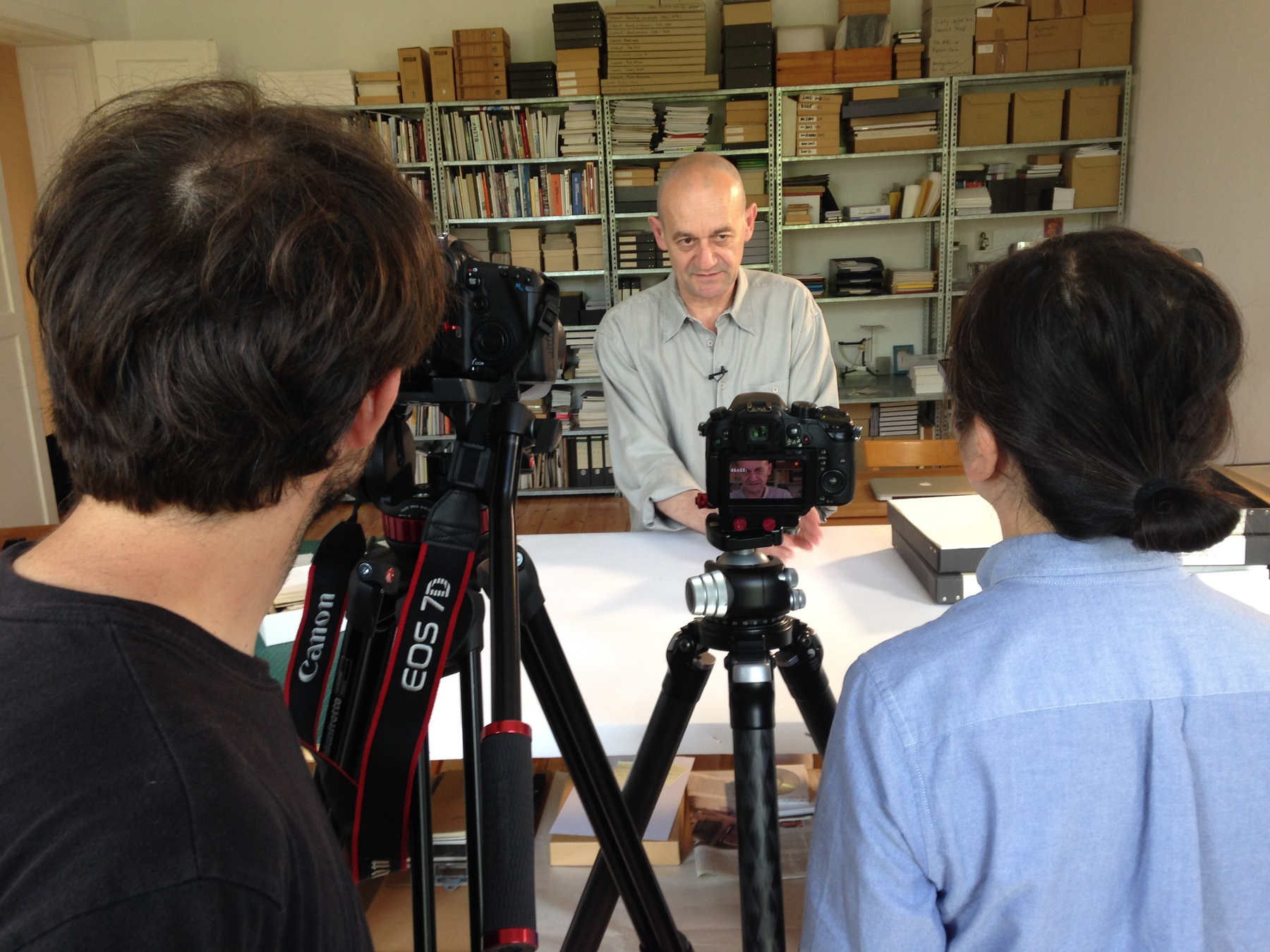
We worked the majority of the time we were in Berlin, but I was able to escape one morning and spend a few hours exploring this beautiful city. My entire photoset is up over on Flickr, but here are a few of my favorites.
I was initially suprised at how green and infused with nature Berlin was. For some reason, my notions of the city had been industrial, rigid and grey. I couldn’t have been more wrong with my assumptions.
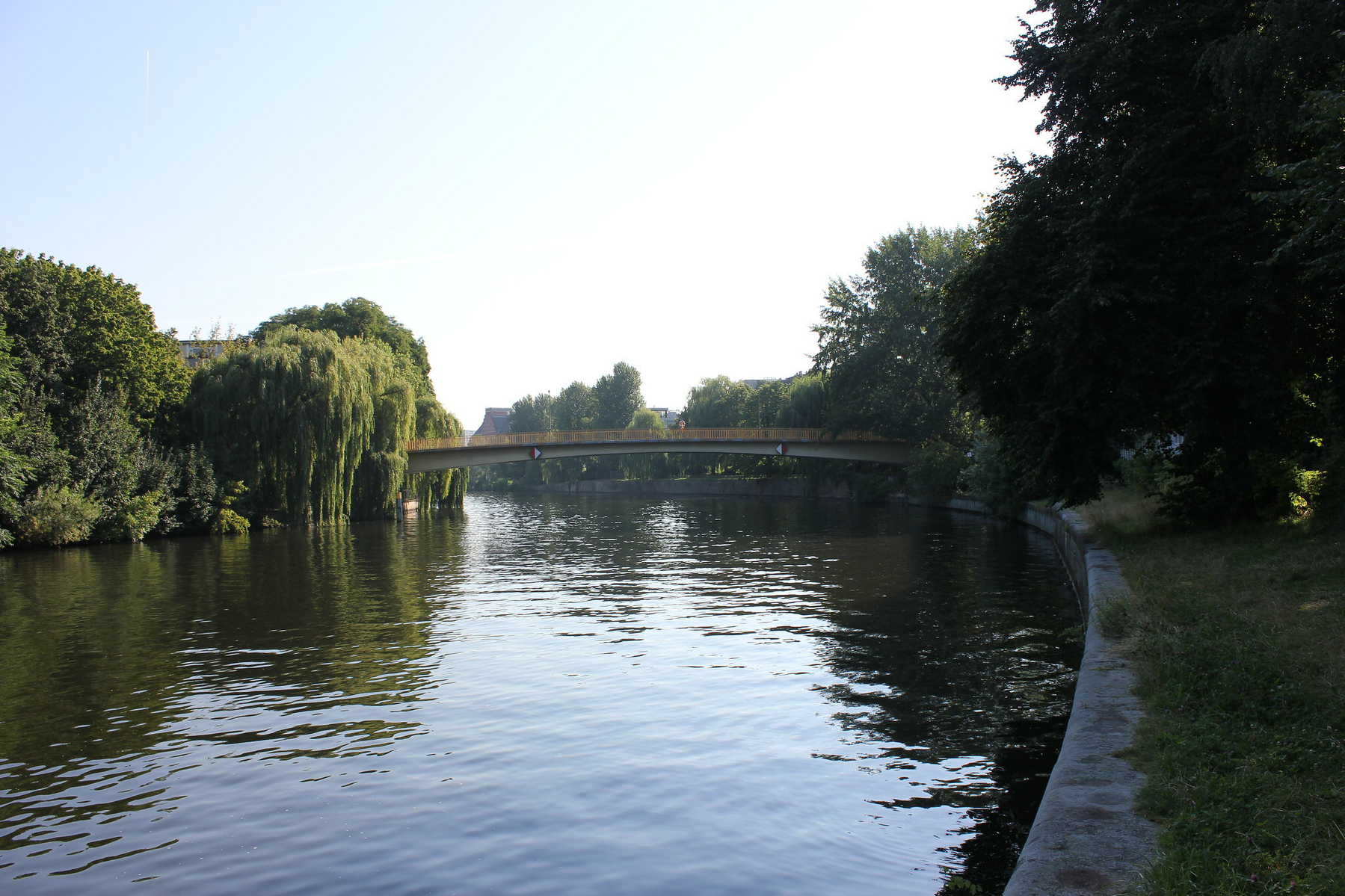
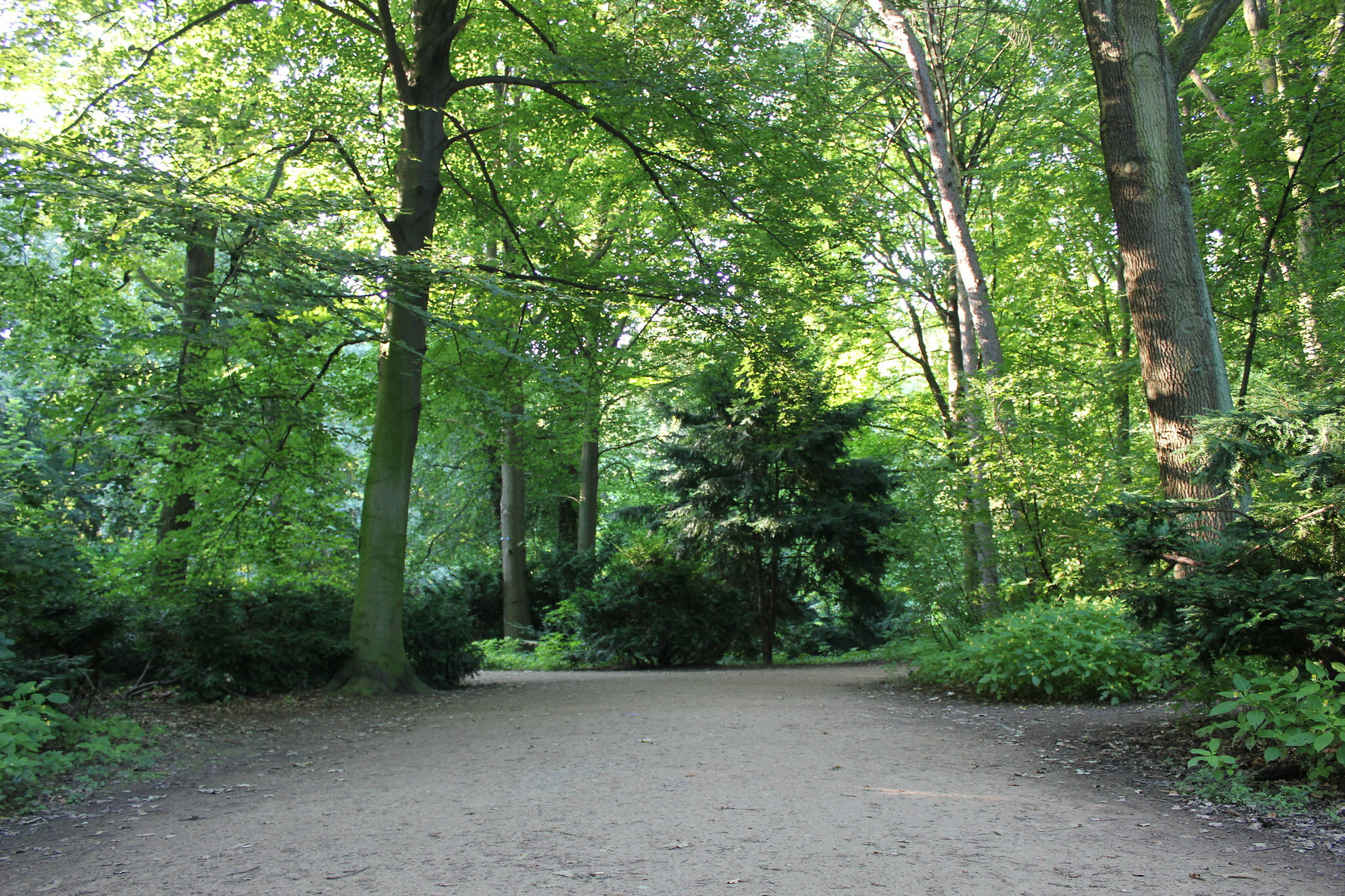
Our hotel was in the Tiergarten neighborhood, which holds a huge urban park of the same name. It reminded me much of New York’s Central Park, but bigger and with more secluded pathways. During my morning walk through Tiergarten, the sunlight was piercing through the tall trees, creating laser beems of light all around me. It was beautiful.
On the other side of Tiergarten, I emerged in Mitte, the city center, at the foot of the Brandenburg Gate. I must say I was caught somewhat off guard by its lurking enormity, just adjacent to the tranquil Tiergarten.
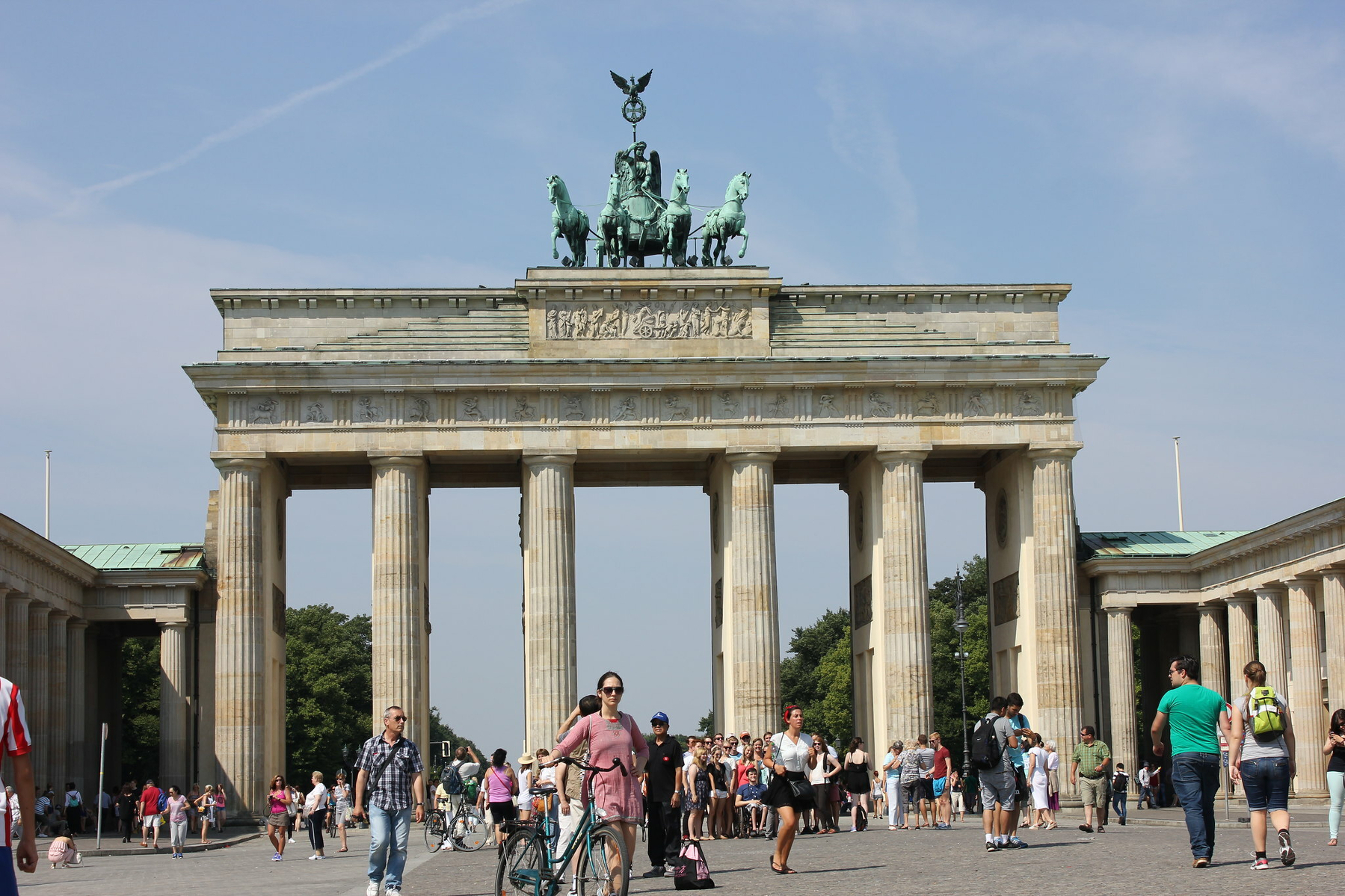
Just through the Brandenburg Gate is Pariser Platz. It was certainly beautiful, but I was struck by the commercialization of the square. Just out of view, to the right of the frame, is a Starbucks and a retail train of tacky souvenir shops.
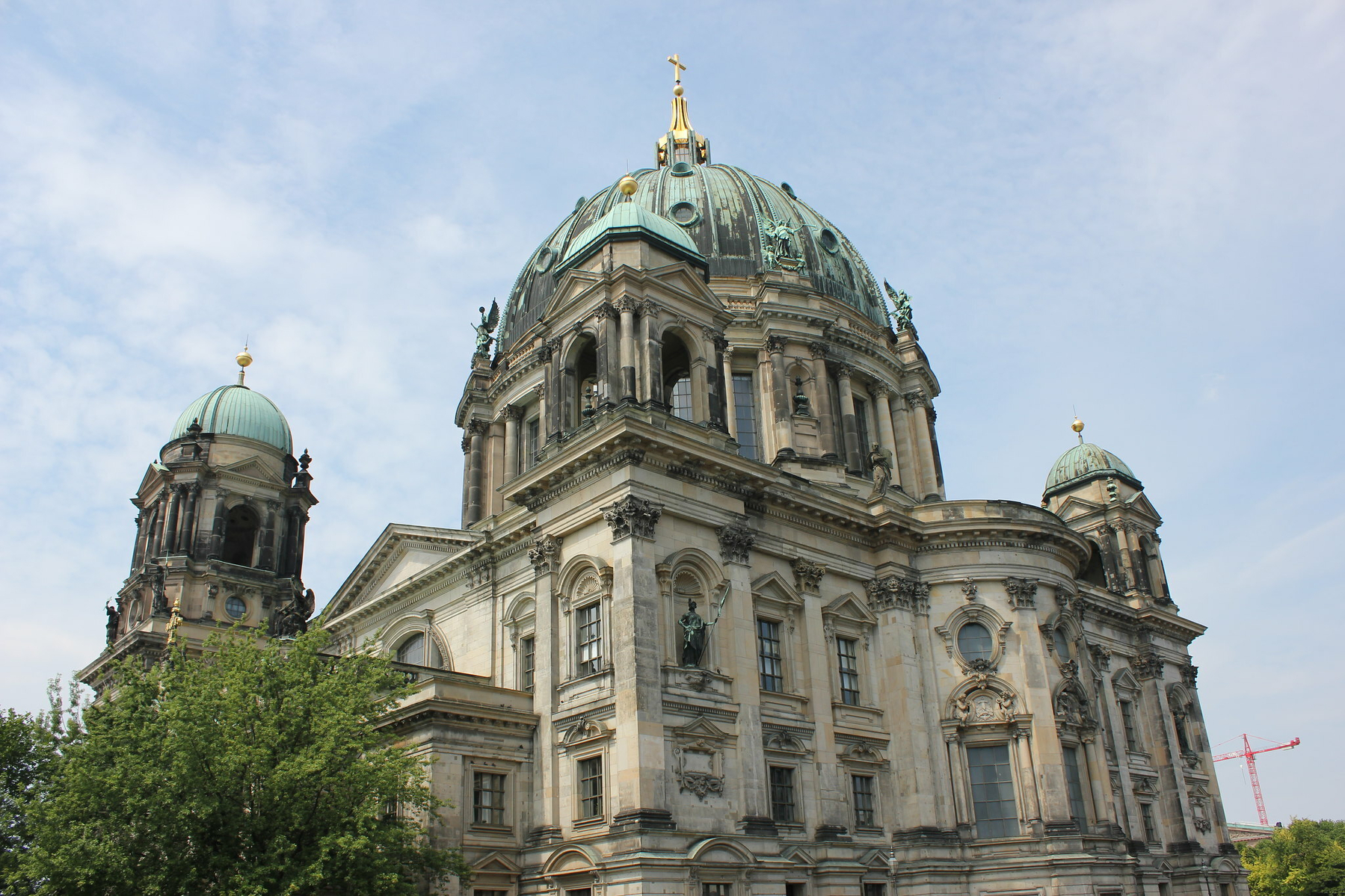
From there, I continued on to Museum Island. Kind of strange for a museum guy, but I didn’t visit a museum. Not enough time.
Walking back through Tiergarten, this discarded poster caught my eye. Having just spent several days interviewing Joachim about his work with found photography, I was compelled to document this find. Translation: Money for Grandma.

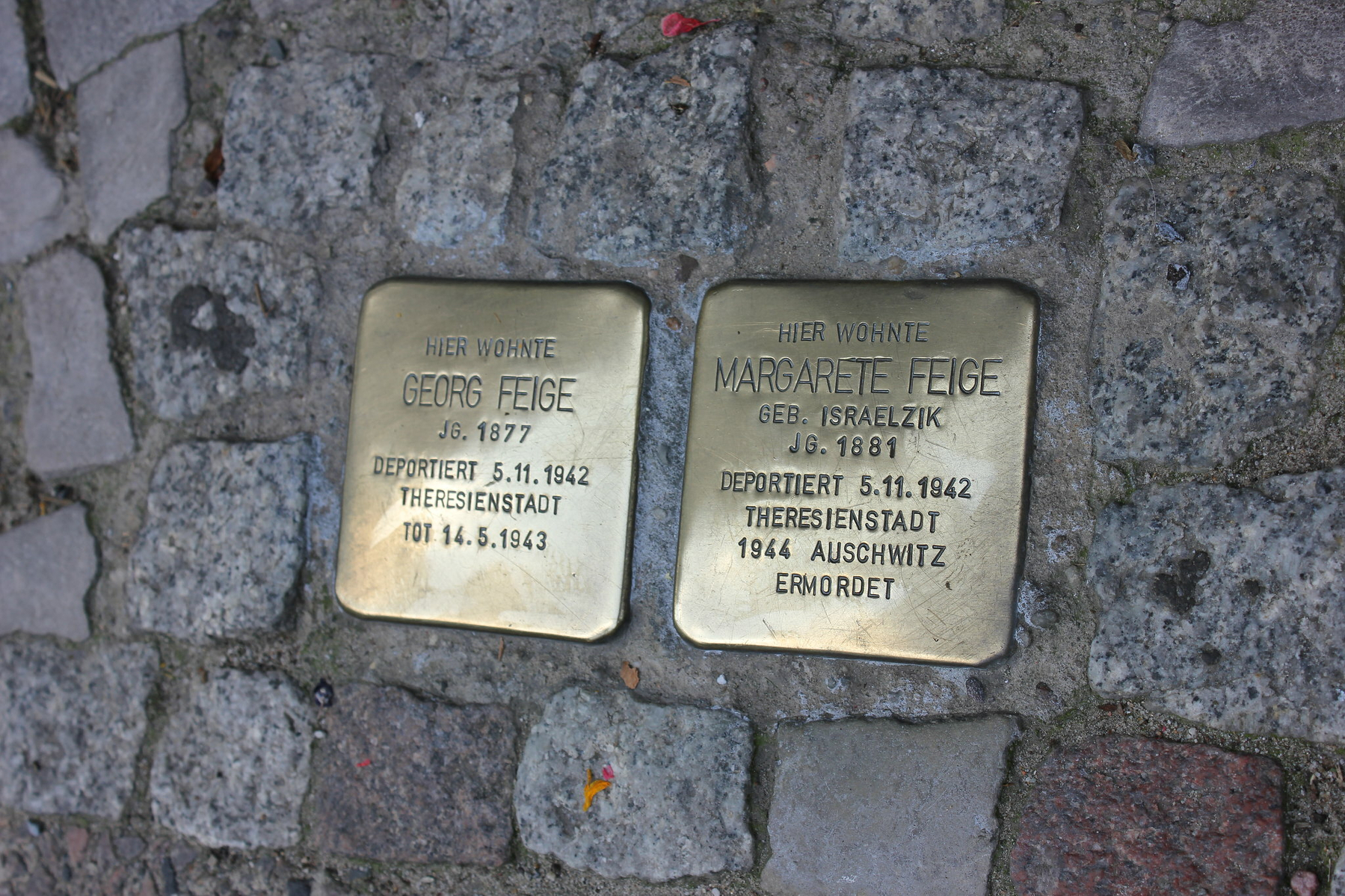
In the neighborhood surrounding our hotel, an artist is leaving bronze placemarkers at the residence locations of Jews who were removed from their homes during the Holocaust. As you walk the streets, you see these little memorials outside the doors of many buildings. I’d love to know who the artist is. If anyone has information, please leave it in the comments below.
I couldn’t leave Germany without taking in some of the tasty brew! Luckily, there was a fantastic Biergarten about a block from our hotel. I’m not sure which was better at this place, the beer or the food. Highly recommended if you’re in the neighborhood.

Vague, but Exciting!
I’ve spent the past few weeks traveling around Europe for work. While that may sound super glamorous and exciting, it really wasn’t. We worked nearly around the clock and that left very little time for exploring or sight-seeing. On a few occasions, however, we did manage to put down the work for some quality extracurricular experiences.

The first leg of our trip brought us to Geneva, Switzerland. The city itself was so picturesque. Almost too clean. You can definitely see it’s been a country that’s kept itself out of conflicts and military altercations.
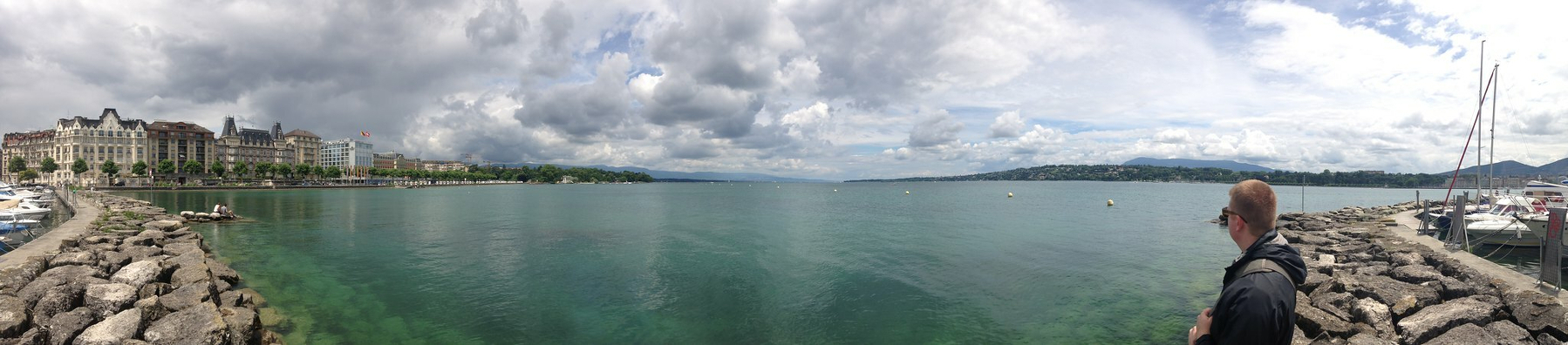
Lake Geneva was simply breathtaking. Nestled up right next to the historic city center of Geneva, it provides an amazing juxtoposition to the jagged Alps that lurk out into the distance.
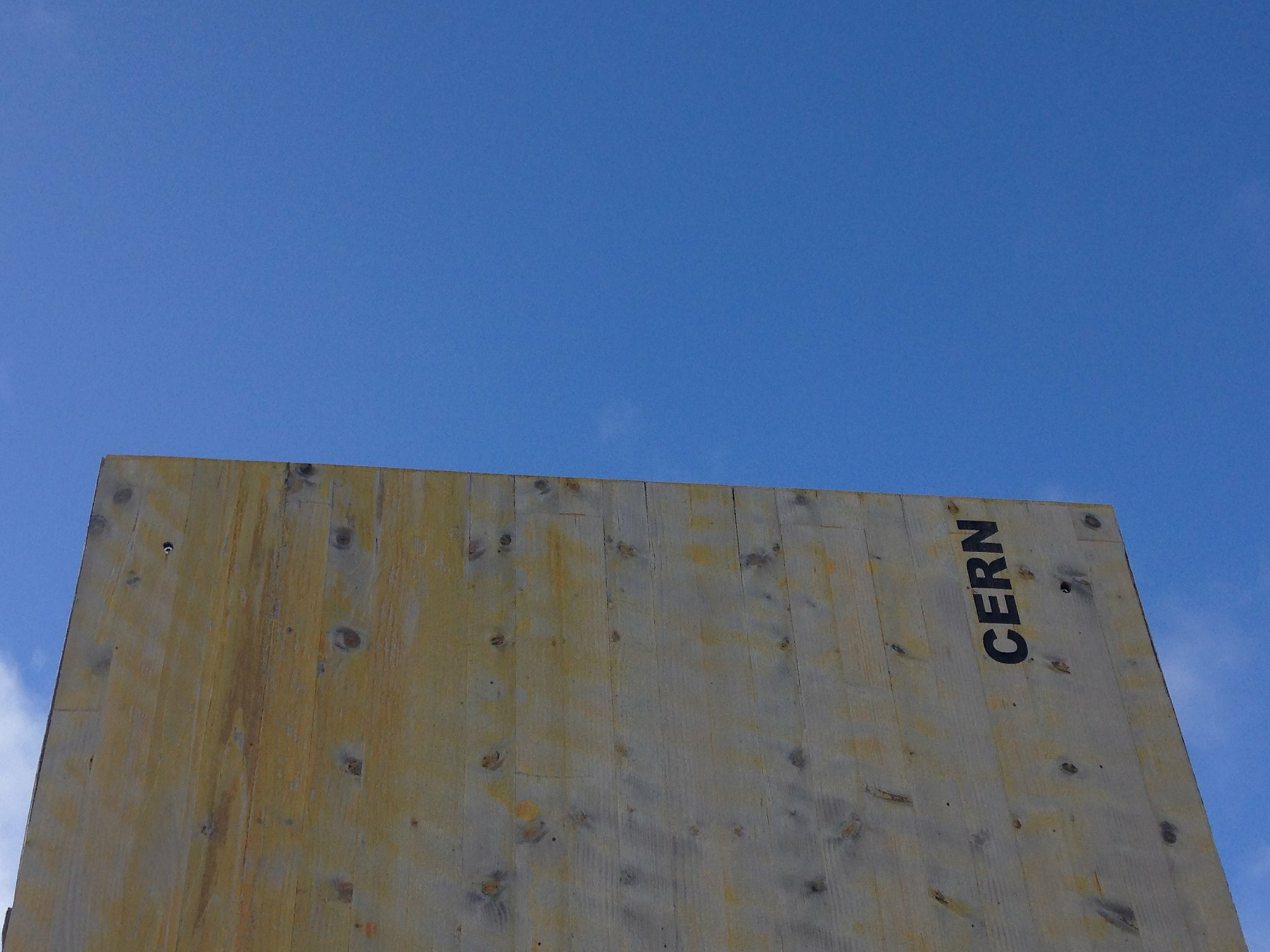
Our official business in Geneva brought us to CERN, the European Organization for Nuclear Research. Being a technologist, this was almost like making a religious pilgrimage. My mind was blown so many times during our time at CERN, I acually lost count. Here is a record of some of the most mind-blowingest moments:
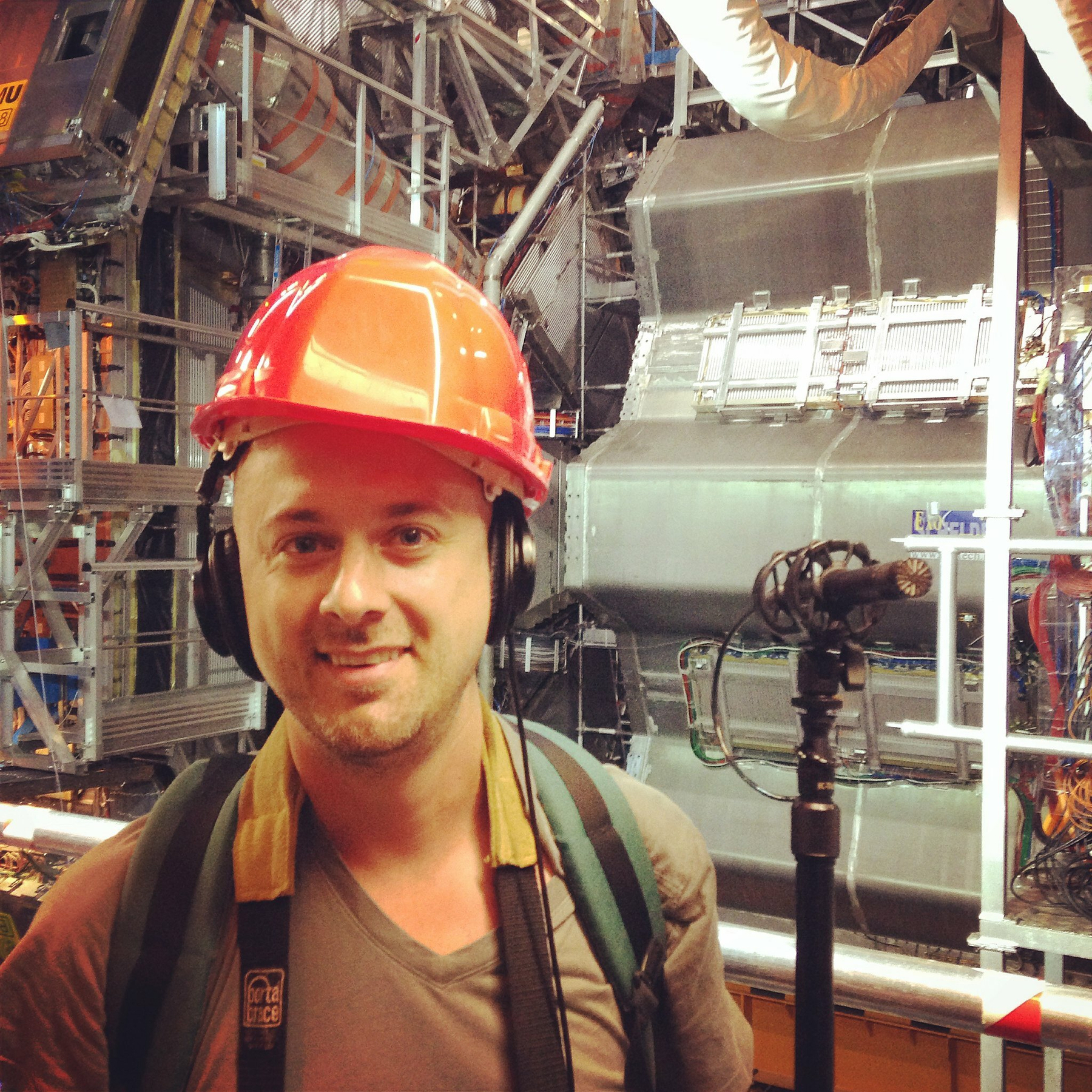
We got to go 300 meters underground to film inside the ATLAS Detector.
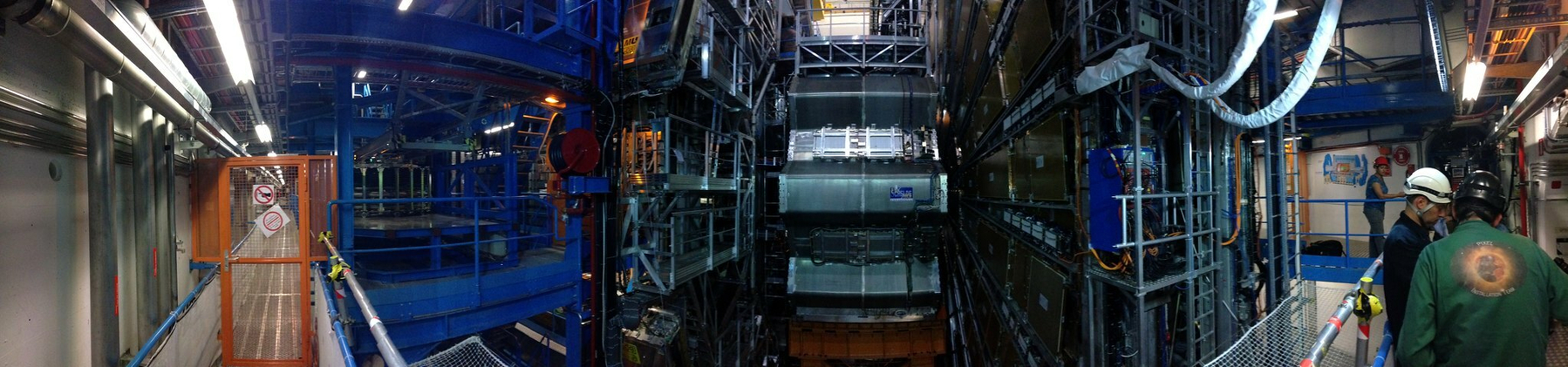
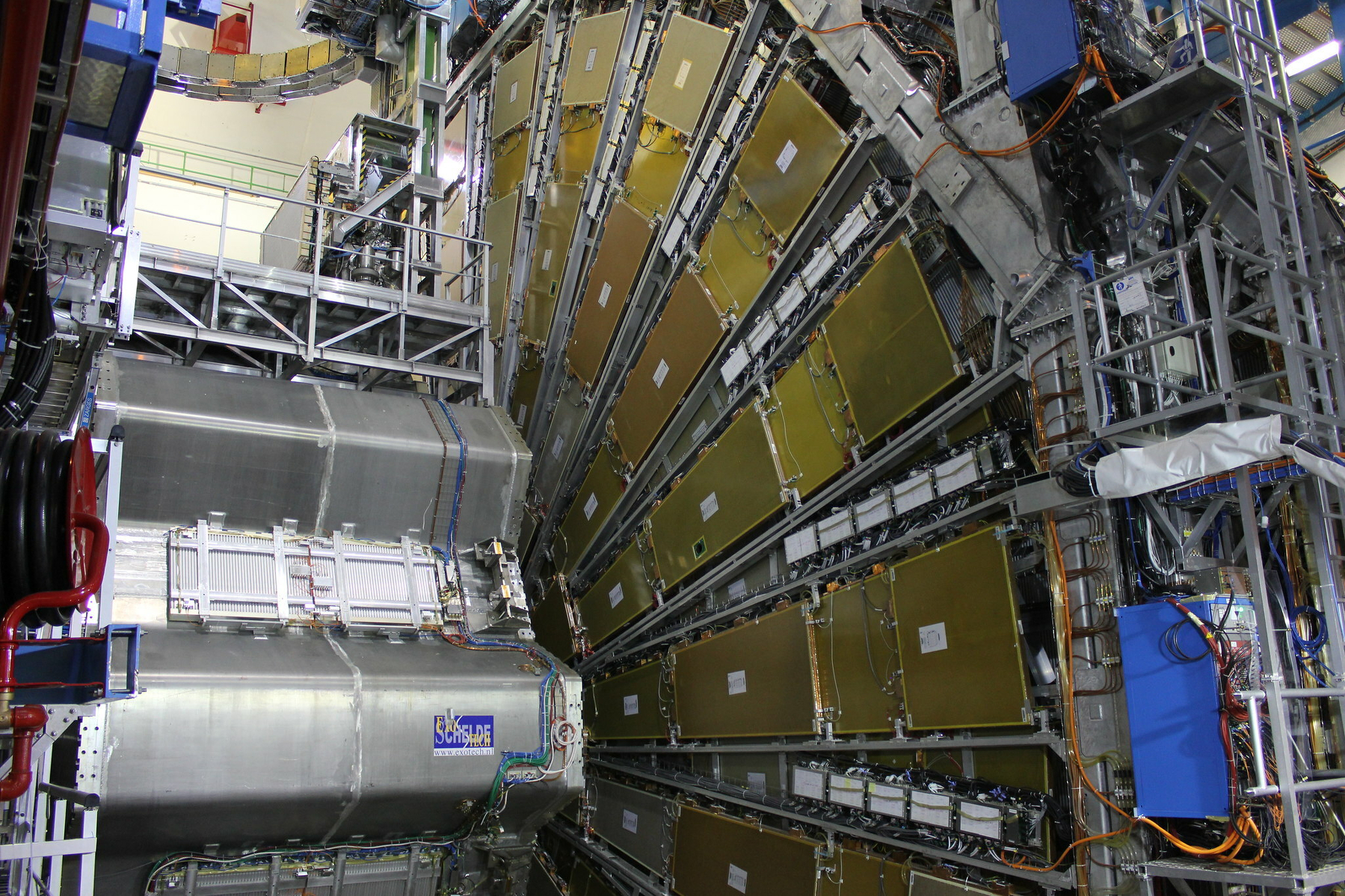
An iPhone panorama shot from the observation deck inside ATLAS. It’s hard to see from these photos the enormity of this machine. It’s essentially the world’s largest camera.

The CERN Fire Brigade escorted us to the top of this water tower – the tallest point on the property – so we could get some arial/landscape shots. Only two people could fit in the elevator to the top, so we had to make several trips with the crew and equipment.
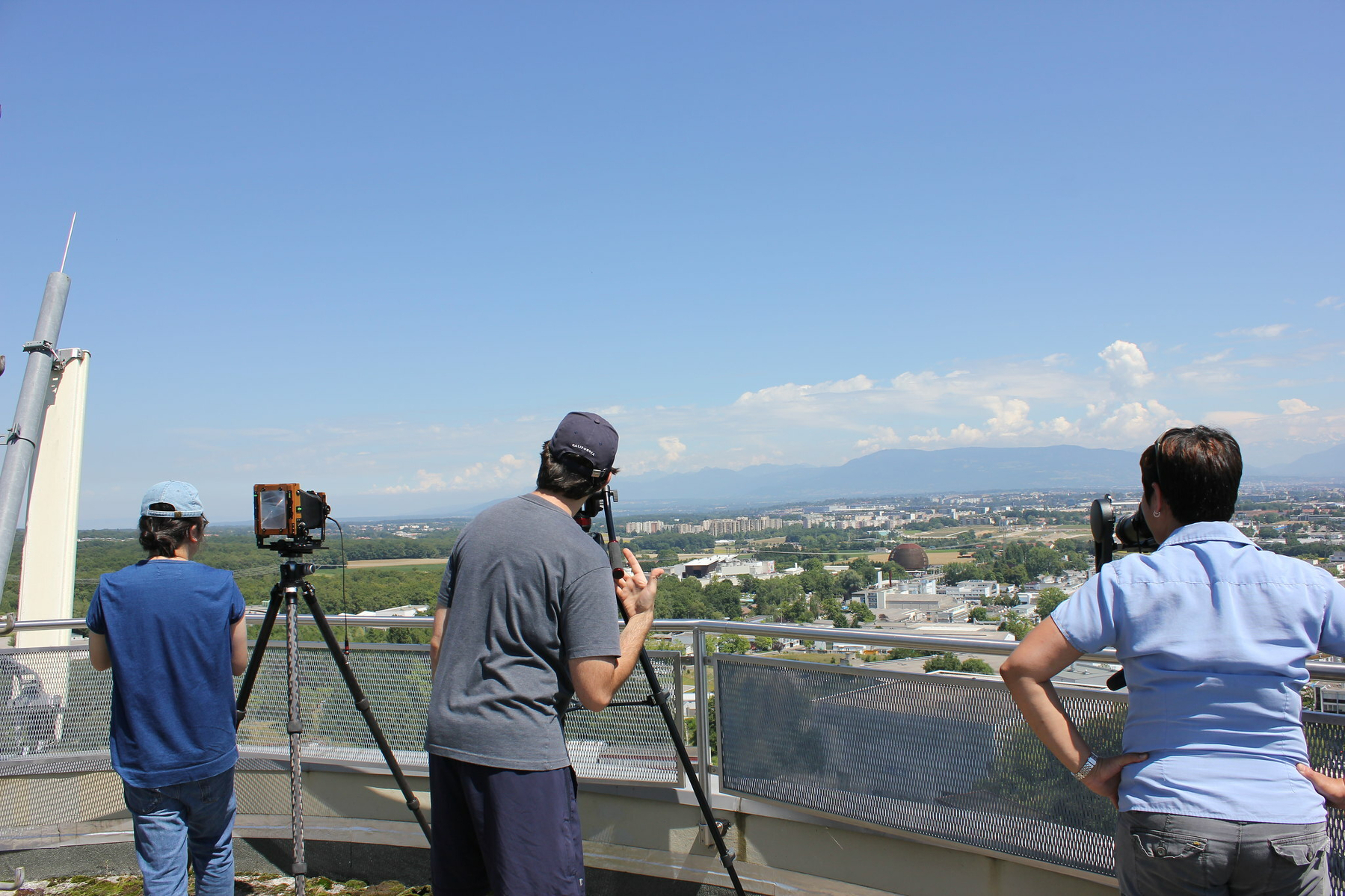
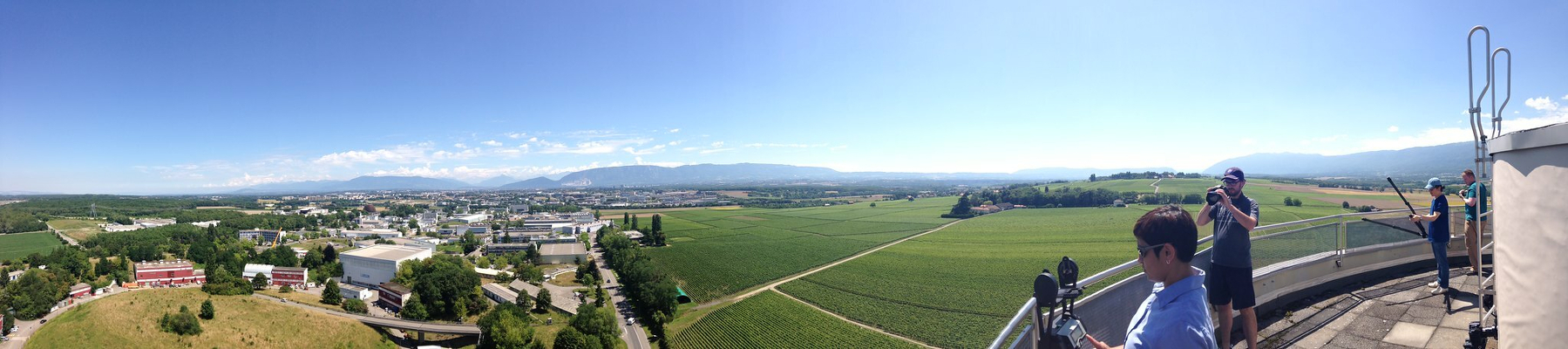
The view from up top was breathtaking. To the left is CERN, and to the right? Yep, that’s the French countryside. What’s that in the distant middle? Oh, just Mont Blanc, the tallest point in the European Union.
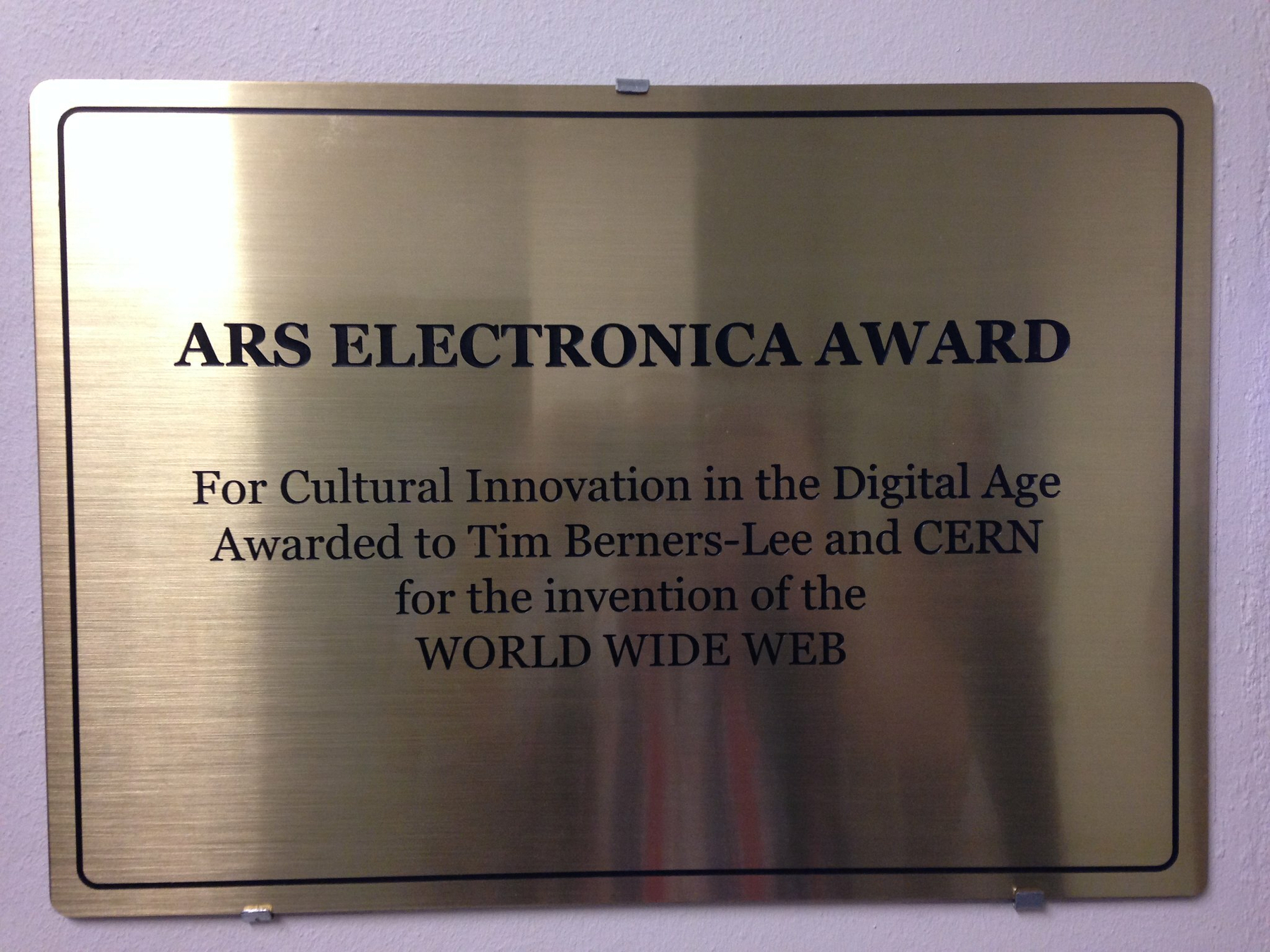
CERN is also the place where, in 1989, Sir Tim Berners-Lee invented the World Wide Web. I couldn’t leave this place without geeking out a bit. We got to see one of the world’s first two web servers. It’s just a NeXT desktop, but to think of the ripple effect this single machine caused is awe inspiring. We also got to see the office in which Berners-Lee worked on the project. Apparently his web project was described early on as “vague, but exciting.” Amazing.
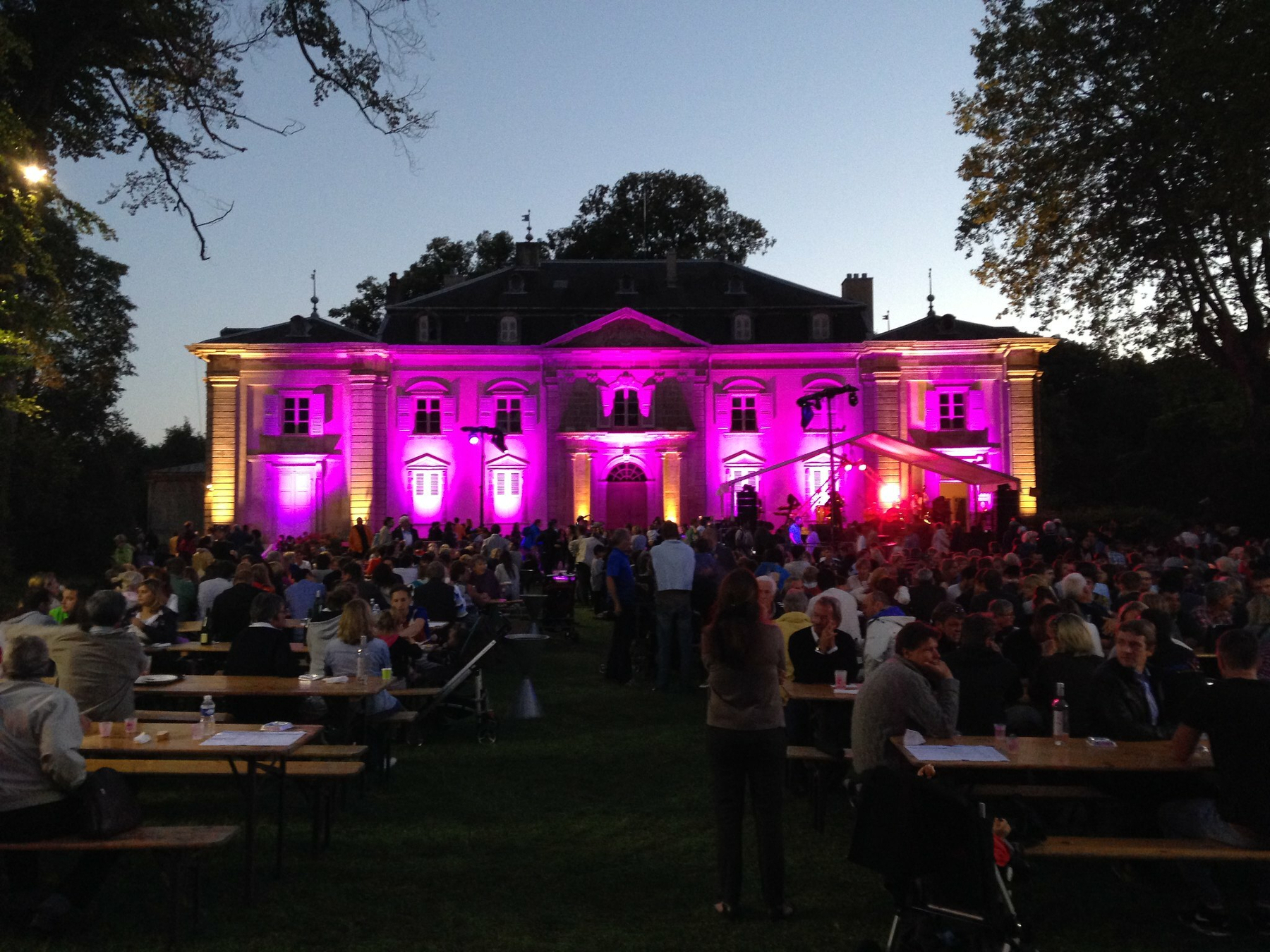
Even though our work was in Switzerland, our hotel was just across the border in France. We got a tip one night from a local that there was going to be a Bastile Day party in the neighboring town of Ferney-Voltaire. Turns out, the party was taking place on the lawn at what was once Voltaire’s chateau! There was music, food, bocci and fireworks. A really great evening.
As usual, all my Geneva photos are up over on Flickr.
Viva la France
Jilly and I recently had the opportunity to spend a few days in Paris. One of the things we love to do together in a new city is set out early to walk, eat and drink our way through the unfamiliar streets. We usually tackle a different direction or neighborhood each day. This approach allows us to get a feel for the local culture and discover the pockets of communities that give a city its life. It’s amazing how quickly the streets become more familiar.
This recent trip to Paris was particularly wonderful. We were celebrating our ten-year wedding anniversary, the weather was perfect and some good friends from London made the trip across the channel to hang out for a bit.
I kept my camera close the whole time, and these are a few of my favorite shots from the trip.
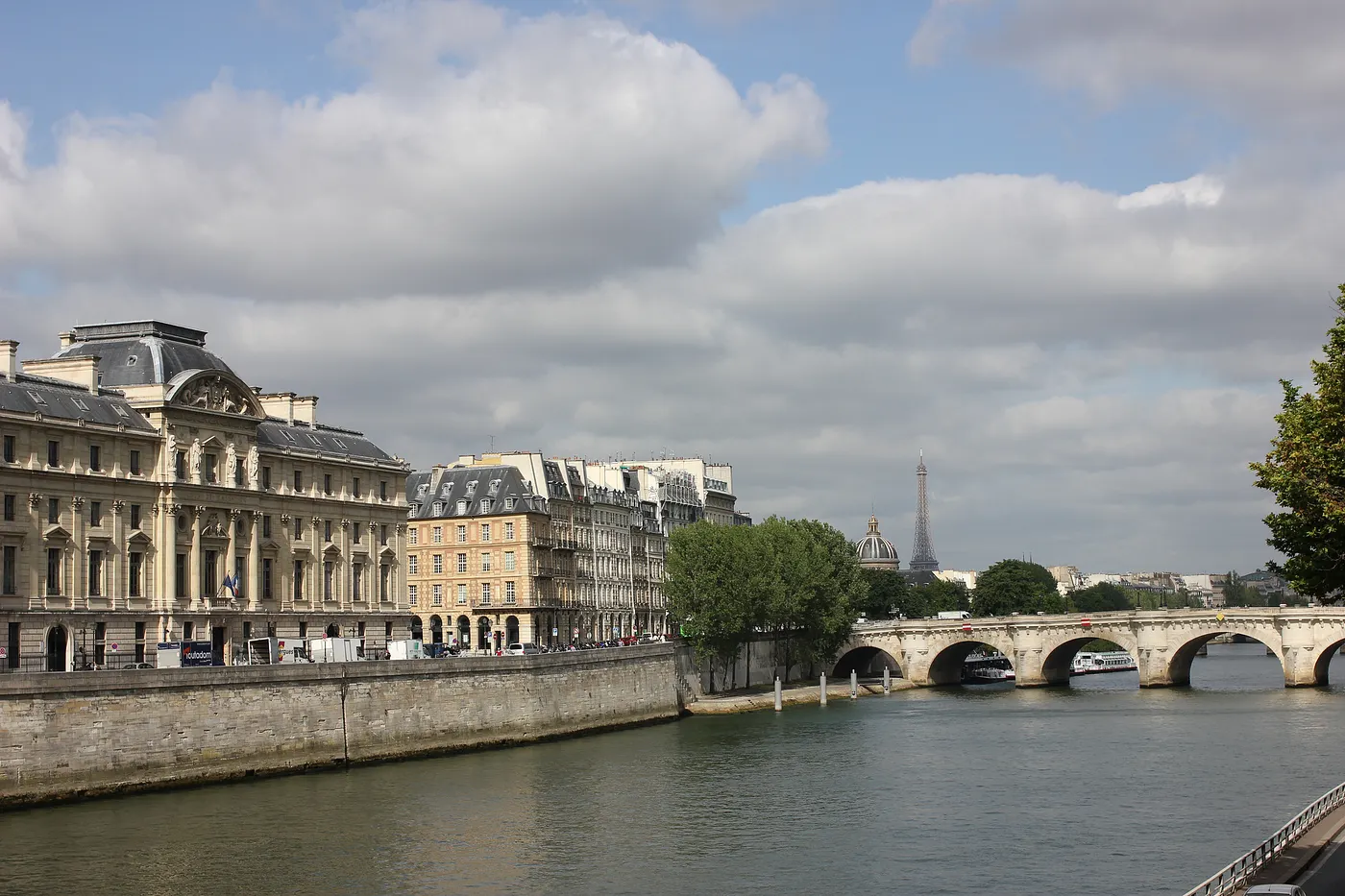
A morning view of Cité, with the Eiffel Tower in the distance.
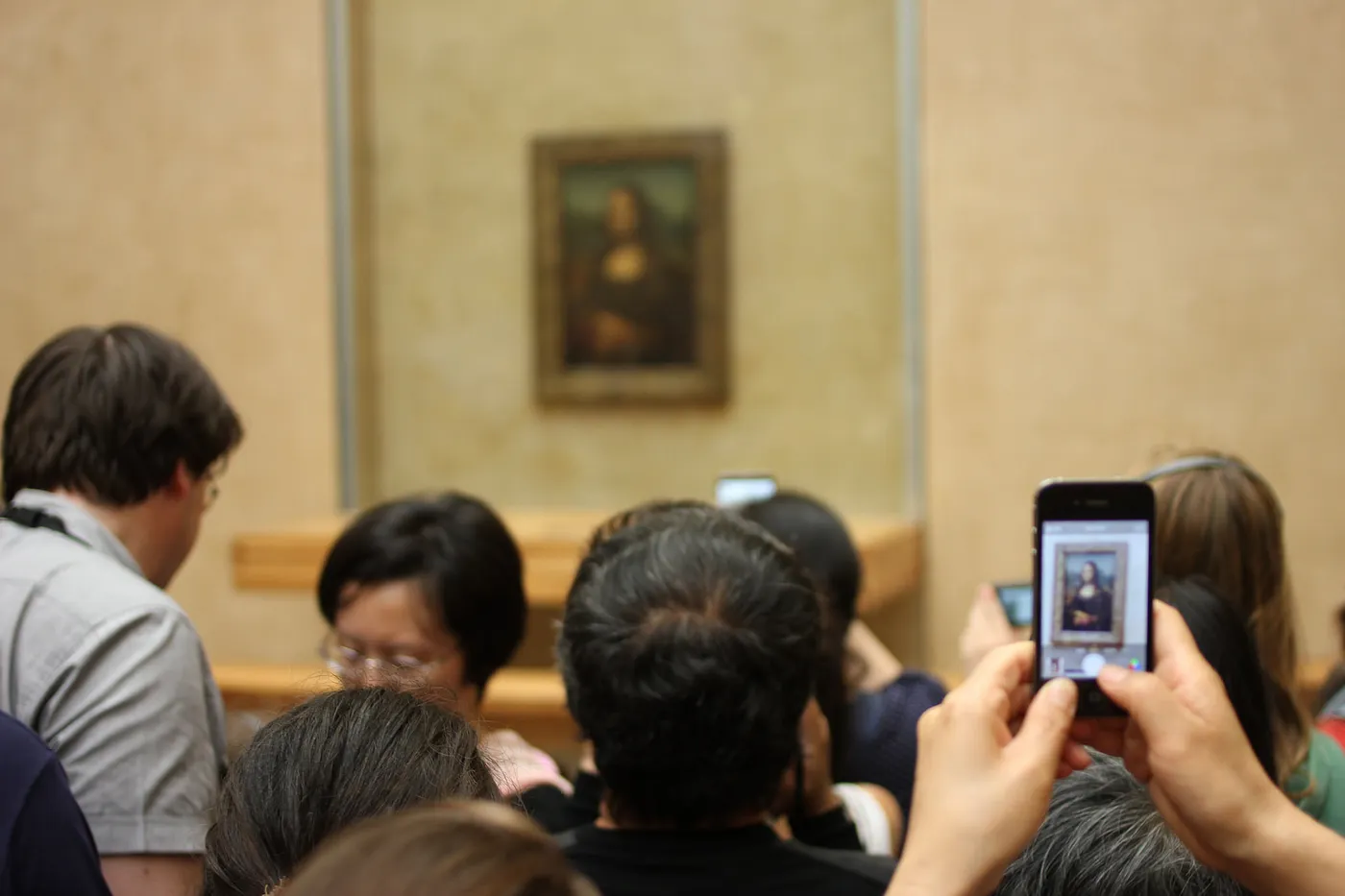
The Louvre was too crowded to enjoy or spend any quality time with the collection. This image captures that sentiment well. We saw the Mona Lisa because we felt we needed to, then promptly left to check out some other museums.
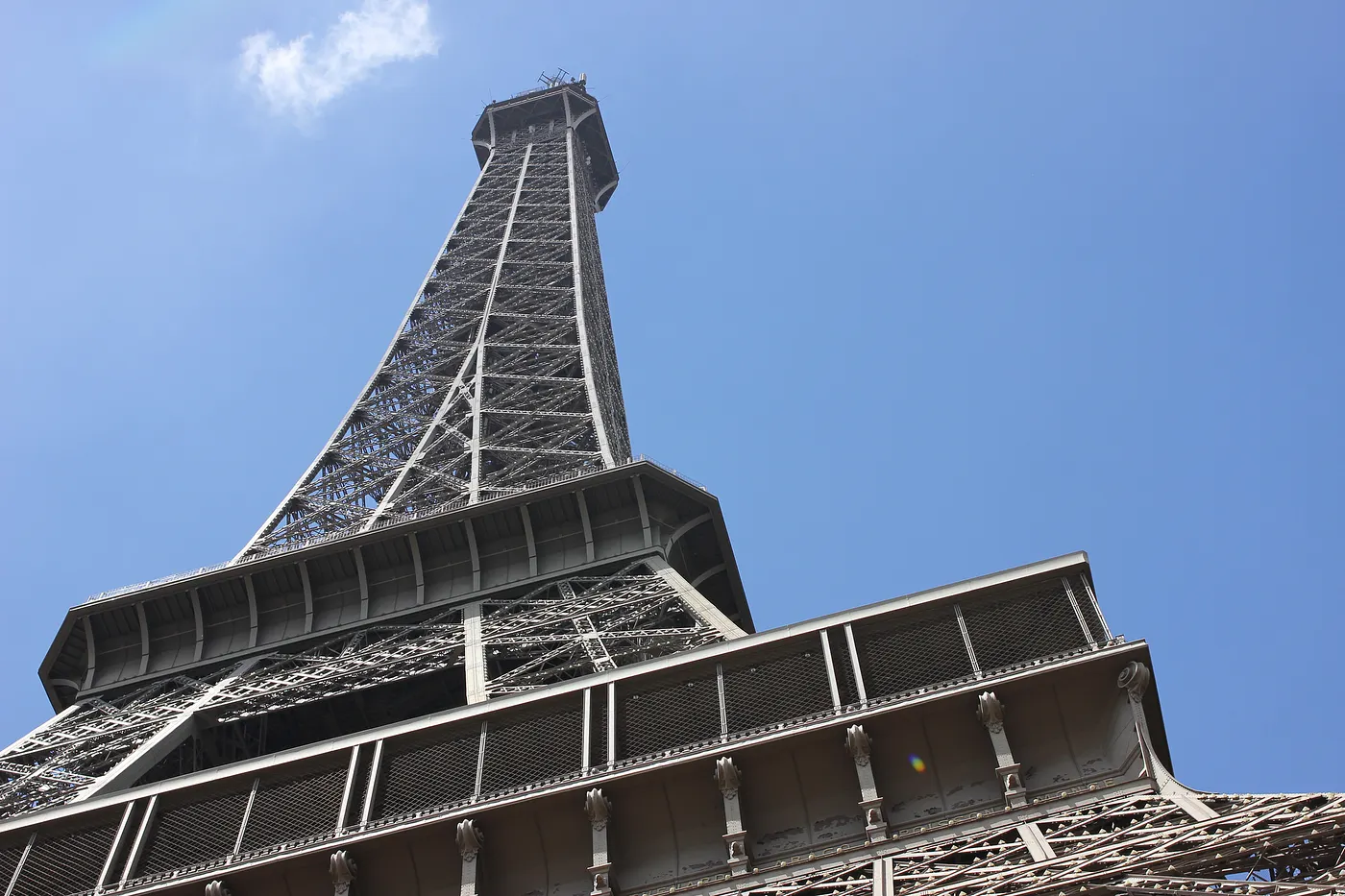
I didn’t realize how massive the Eiffel Tower was until we were underneath it. I mean, I knew it was big, but for some reason I was surprised by its delicate enormity.
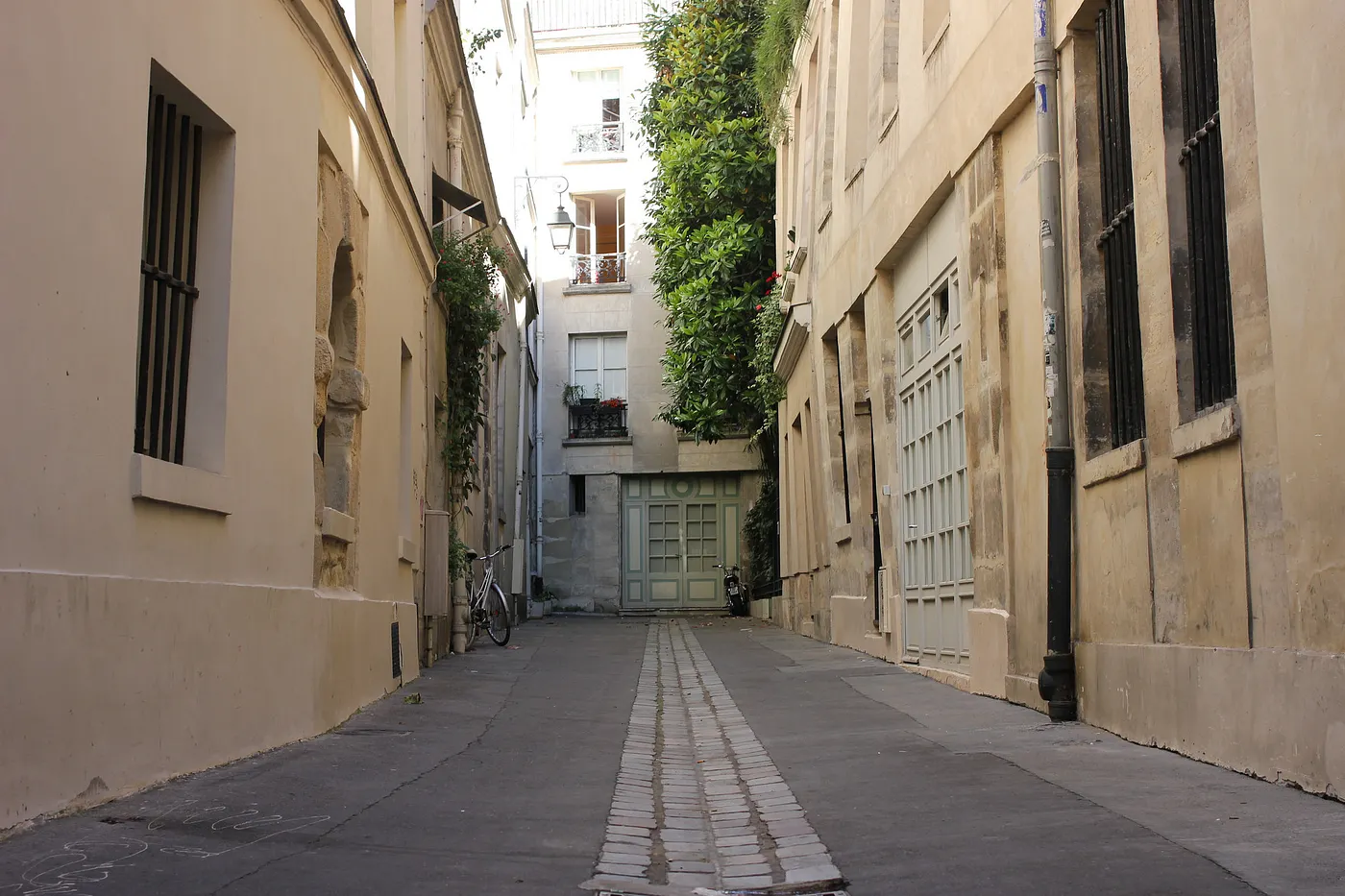
I love this alley for some reason. It was super quiet and lovely. So Parisian.
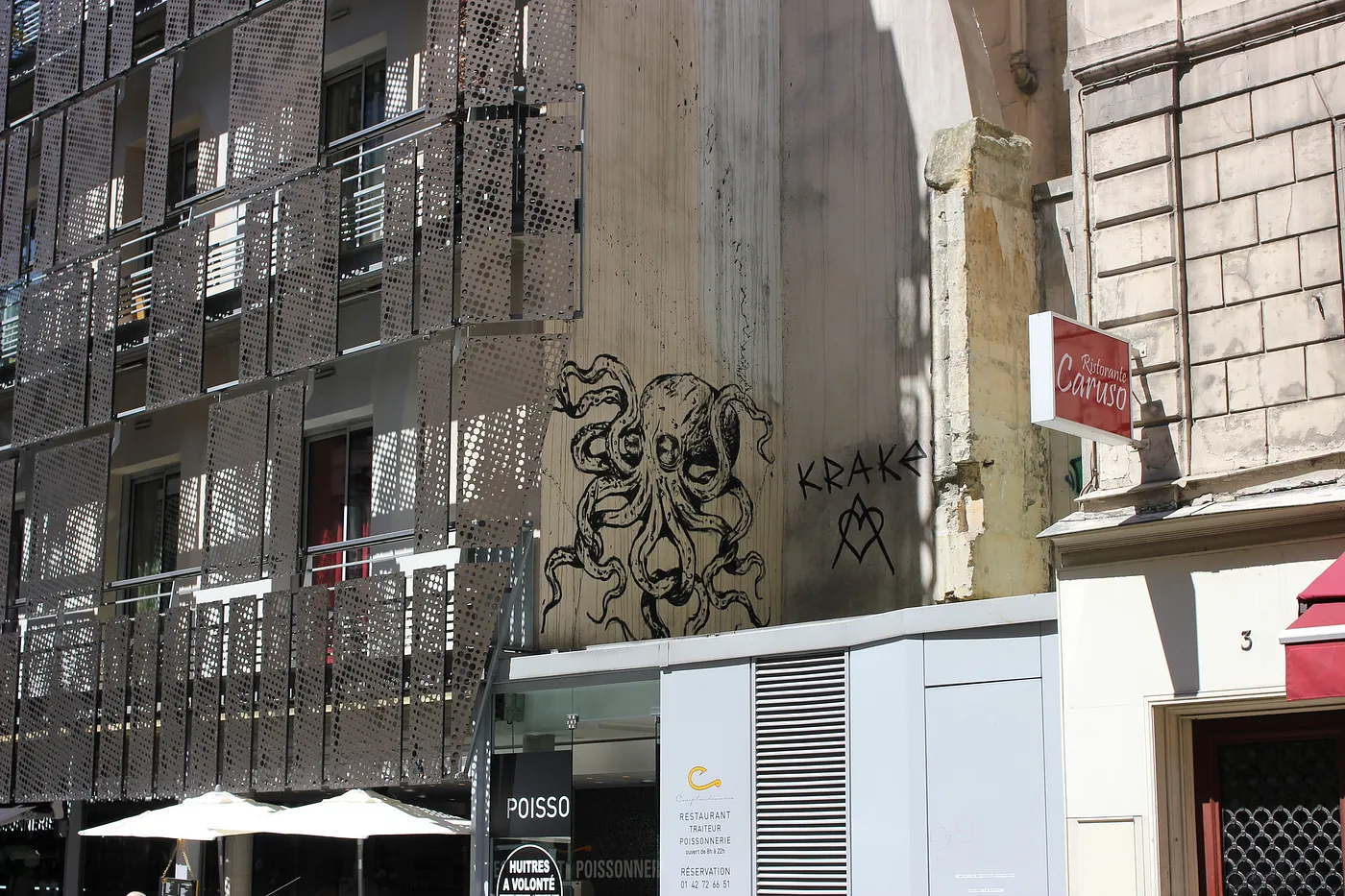
The street art was great. Interesting stuff everywhere. I spotted these octopus pieces in a few neighborhoods throughout town. Anyone know who the artist is?

By chance, we stumbled upon 59 Rivoli, an amazing artist residence/squat in the beautiful neighborhood of Le Marais. There were so many great and friendly artists working when we stopped by. Reminded me a bit of the Mattress Factory.
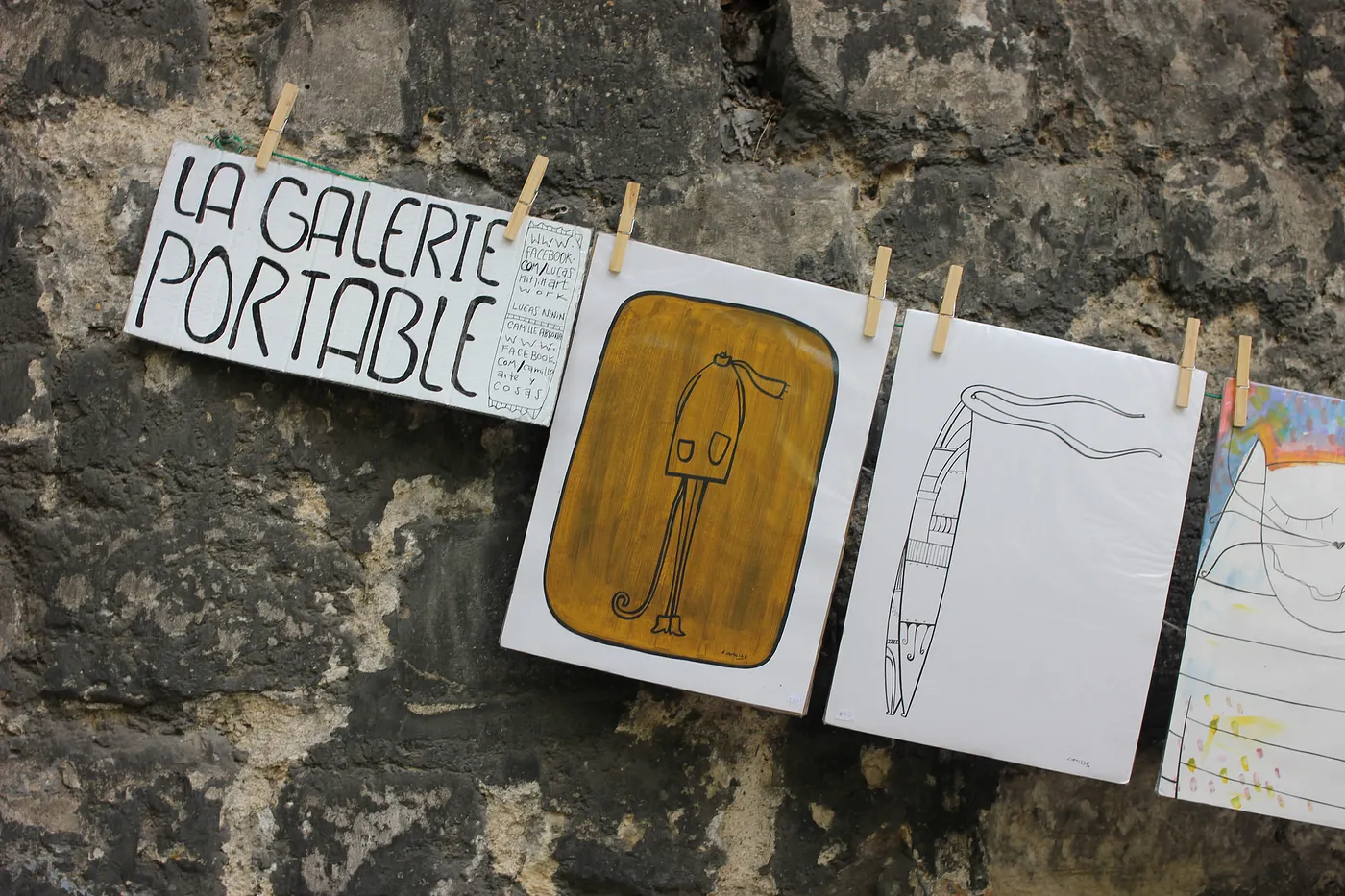
A portable art gallery on the street of Montmartre. What a great part of town. It was quite a hike (we walked the whole way!), but well worth it.
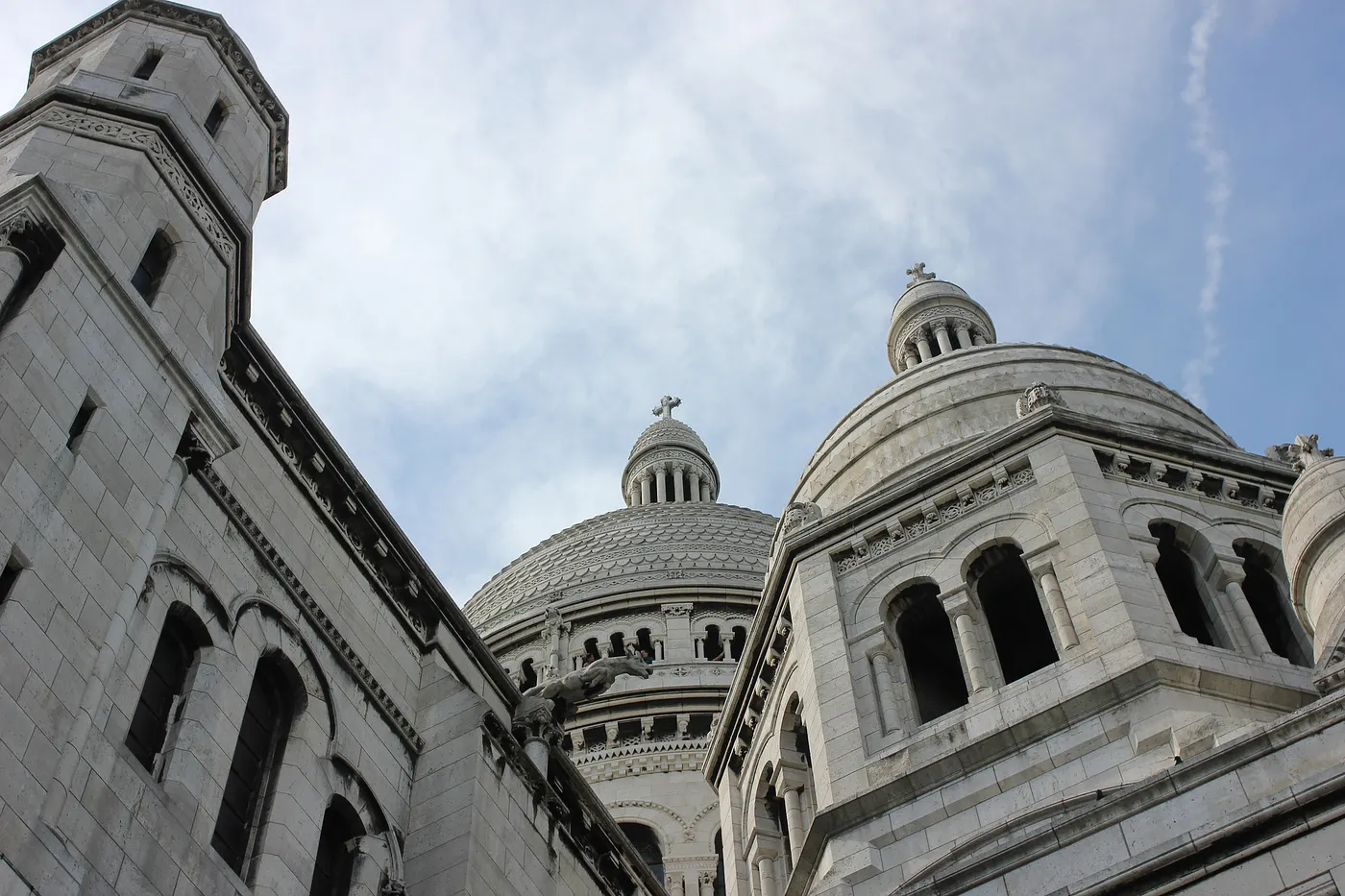
And the Sacré Coeur! So beautiful. Quite a reward for making it all the way to the top.
The entire set of images is up over on Flickr. As usual, everything is CC BY-NC-SA.
From Crowdsourcing to Community Sourcing
The following is a talk I gave at the American Alliance of Museums conference in Seattle on May 20, 2014. It was part of a panel called Crowd Sourcing to Community Sourcing: Engaging Visitor Input.
Hi. My name is Jeffrey Inscho and I lead digital and emerging media efforts at Carnegie Museum of Art in Pittsburgh, Pennsylvania, USA. For the past two years, my museum has been experimenting with new approaches to programming designed to harness community input, elevate visitors from passive viewers to active participants, and inform/disrupt our institutional concept of what gallery experiences can and should be.
My goal is to highlight two specific projects — one complete and formative, the other in-progress — that exemplify just how transformative this type of approach can be for an institution.
Before we get into the details of these particular projects, I think it’s important to begin with a bit of institutional context. The image you’re looking at now is from 1896. In it you can see artworks being delivered to the museum via horse-drawn wagons. I think this image says a lot about our institution. On one hand, it’s just that: an institution. And not only that, it’s one with more than a century of institutional tradition — processes, workflows and operations that have been ingrained into the fabric of the place. CMOA certainly isn’t alone in this respect, and I’m not speculating on whether this is good or bad. It’s just a fact and I’m just annotating it as an accepted truth.
On the other hand, my museum also has aspirations of achieving relevance in the lives of non-traditional museum-goers and diverse audiences. This increasingly means CMOA must operate in sync with — not in competition against — the fast-moving world around us.
Exhibitions not excluded.Reimagining our programming so it resonates with people on their terms and on their turf — that’s where these concepts of community sourcing and open authority come in for us.
This story begins in the fall of 2012, when we were presented with an interesting challenge by Lynn Zelevansky, our director. A slot was made available in our Forum Gallery for an open-ended experiment. The goals and specifications set forth for us were this:
- Create an experience where visitors would engage with real artworks in a personally meaningful way. We had to use collection objects; This was an insistence of our director.
- Make new connections and forge meaningful relationships with a target demographic (in this instance 20- to 40-year-olds), particularly by connecting real-word & online experiences.
- Open up the museum to true dialog with the public and have that public actively impact content/display in the gallery.
- Be clear that this was not an exhibition in the traditional sense, but that it was an experimental project.
And with those four directives in hand, a cross-departmental, cross-hierarchical group of colleagues were off to the races.
The working group tasked with making this project happen was diverse and broad. It included not only technologists like myself, but also museum educators, editors, art handlers, curatorial assistants and representatives from our registrar’s office. We met regularly over the course of approximately six months to wrestle around with our ideas, explore the adjacent possibilities, pursue what we thought were invigorating concepts and ultimately refine those concepts into a cohesive and full-featured project.
On the other side of all this ideation, we emerged with a concept we were all very excited about. The premise for our proposal was this:
- We would utilize 13 recent acquisitions from our photography department as the launchpad for the project. Decisions about which works would be made democratically by the working group and we would display these objects in the gallery.
- We would invite visitors to respond to these artworks in a visual or photographic capacity — via their smartphones or computers. - - We would use these responses and feedback to inform the presentation in the gallery during the run. While photos would be submitted and accepted digitally via the web, they would be physically represented in the gallery by their tangible, real-world manifestations.
- We would make every attempt to bridge the digital and physical components of the project, from event programming to the submission experience. It was important to us that this project have real-world impact.
- And finally, we would be institutionally okay if this project flopped. We were aware it was a substantial risk and we were (somewhat) cool with that.
All of this sounds super lofty and conceptual and full of museum-speak. We realized that for this project to succeed, we needed to accurately and effectively communicate the concept to our audience. Strike that, our co-creators. Our partners.
We settled on a short and memorable name: Oh Snap! We employed bold colors and fonts in the graphic design, and we made it as easy as possible for people to participate. Acknowledging the Oh Snap! concept was somewhat non-traditional and a bit abstract, we borrowed a page from the playbook of tech startups, and we produced a brief trailer to effectively convey the project’s personality and process. It’s about two minutes long and quite humorous, so I’ll play it now.
We built a responsive website that served as both the project archive, and also as the photographic submission vehicle. This was mainly an accessibility decision, but it also had budget implications because CMOA had the skill set to develop internally. Once we realized that the major mobile operating systems were loosening up to allow mobile browsers to access camera rolls, it was a no brainer. No app needed.
The rest was akin to a digital Rube Goldberg experiment. We daisy-chained several 3rd party services to facilitate the submission queue, approval process, website upload and participant notifications. Wufoo fed into Dropbox fed into IFTTT fed into WordPress fed into Mailchimp. Super hacky. A lot of variables were at play and I’m frankly surprised it worked.
But it did and the result was a participatory, community-sourced, open authority-infused project that blurred the digital and the physical.
I guess you’re probably interested in the results and how we determined whether or not the Oh Snap! project was a success.
During the 2 ½ months of the project, we received a total of 1,264 submissions. All of them, except for one, made it onto the walls of the gallery and the website. Some of them are really great. You should definitely have a look for yourself. They’re all archived on the project website: ohsnap.cmoa.org.
41% of all participants fell into our target age demographic of between 20–40 years old. That was by far the largest demo group, so I think we were successful in reaching the intended audience. The lion’s share of submissions came from the western Pennsylvania and tri-state area, but we did receive a good number of submissions from locations around the world such as Europe, South America and Asia.
We gave all participants (via email) a free pass to the museum to come see their work in our galleries. Approximately ten percent of those passes came back to us. That may seem low, but when compared to our average return rate of 3%, we were very happy with that percentage.
Fast forward one year. Oh Snap! was so transformative for us as a proof-of-concept and an institutional precedent, that we were able to leverage some of the velocity we created with it into an extremely large-scale project called the Hillman Photography Initiative. An incubator for innovative thinking about the photographic image, the Initiative aims to present a new programming model for the museum and revolutionize the notion of what a museum can be and do in the digital age.
Just to be clear, research and planning for the Initiative had been occurring for some time, but the notion of community sourcing became a valid option for us rather recently, only after the first cycle of projects had been solidified and the successes of Oh Snap! had been realized. You can learn more about all the projects that make up the Hillman Photography Initiative at nowseethis.org. For now, though, I’ll focus on a specific project that embraces this philosophy of community sourcing.
One of the projects in the initial cycle of the Hillman Photography Initiative is A People’s History of Pittsburgh. This is a very compelling project that parlays many of the things we learned with Oh Snap! into a cohesive experience that blurs the physical and the digital, and has its thesis rooted in community.
Through A People’s History of Pittsburgh, the museum is asking people to send in their Pittsburgh memories and become a part of a collective photo album for the people of Pittsburgh. Fueled by those who still live in the city, or those in the “Pittsburgh Nation,” this project invites people to contribute family-owned, found, or anonymous photographs. We’re also asking participants to share their unique stories about life experiences from the Pittsburgh region. A People’s History of Pittsburgh exists as an ever-growing online archive — filterable by date, geo tag, and theme — as well as an eventual print publication.
A People’s History of Pittsburgh has only been live for a few weeks, however we’re already starting to see some great participation.
Like this image, submitted by Matthew Newton, which depicts his grandfather manning his desk (broken arm and all) at the Mesta Machine Company, in Homestead, an industrial suburb just outside the city, in 1972. Matthew notes in his story about this photo that the back is inscribed with the affectionate description, “Sad Ass Hank.”
Or this photo from Kurt Tint depicting the Carnegie Danceland in the 1950s. His dad was the original proprietor.
Or even this recent image, circa 2011, from an anonymous user who captured a popular street musician known for performing in the Strip District.
A People’s History of Pittsburgh also manifests itself on-site at the museum. Because that’s the point of all this right? To impact the experience when someone is here with us? Throughout the run of the project, the museum will be displaying the images on-site, as well as hosting a series of “scanning days,” designed to help community members with little or no internet access be a part of the project.
I’ll leave you with this image. It’s one of many hand-written notes from visitors we received during the Oh Snap! project. Validation like this was important to both the working group as well as the museum, and it went a long way in affirming to us that we made something that meant something — not only to us, but to a community of participants who actively partnered with us to make the thing happen. Community sourcing projects are impossible without an engaged and invested community.
Thanks for listening. Everything I showed and said today can be found on my site at this link, and if you have questions please do holler on Twitter or email. Thanks!
A Week With Techno-Archeologists
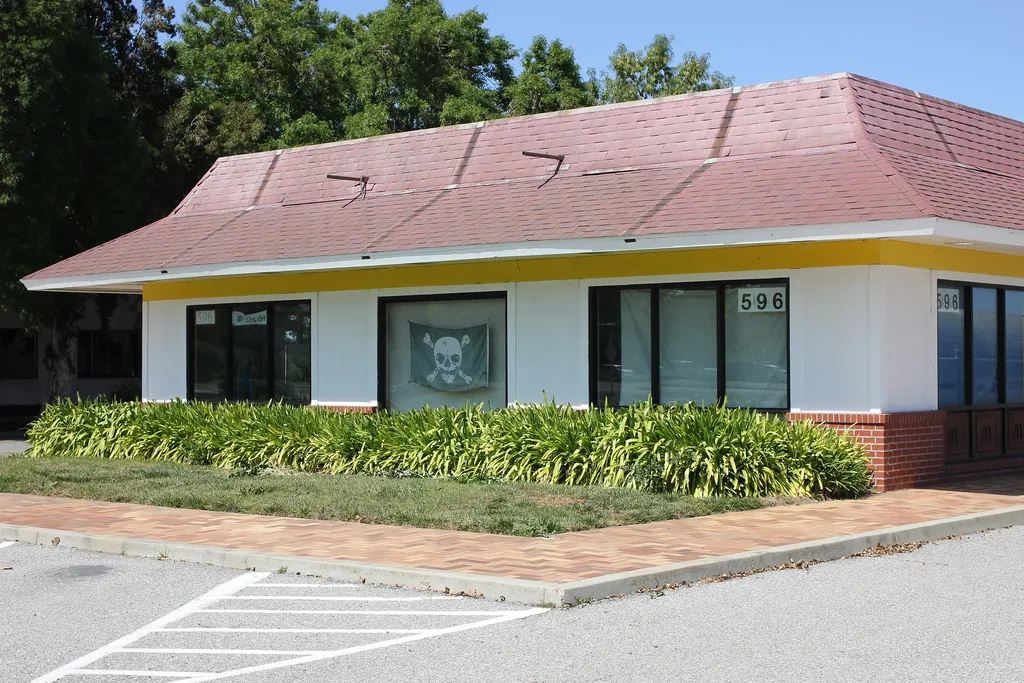
I’ve spent the past week in Mountain View, California, hanging out with a group of Lunar Orbiter Image Recovery Project (LOIRP) hackers who are working out of an abandoned McDonald’s on the NASA Ames base.
For more than five years, LOIRP technologists (or techno-archeologists, as they prefer to be called) have been reverse-engineering analog tape drives and developing new software in an attempt to unearth some of the first images of the moon that were taken by unmanned lunar orbiters in advance of the manned Apollo missions of the late 1960s.
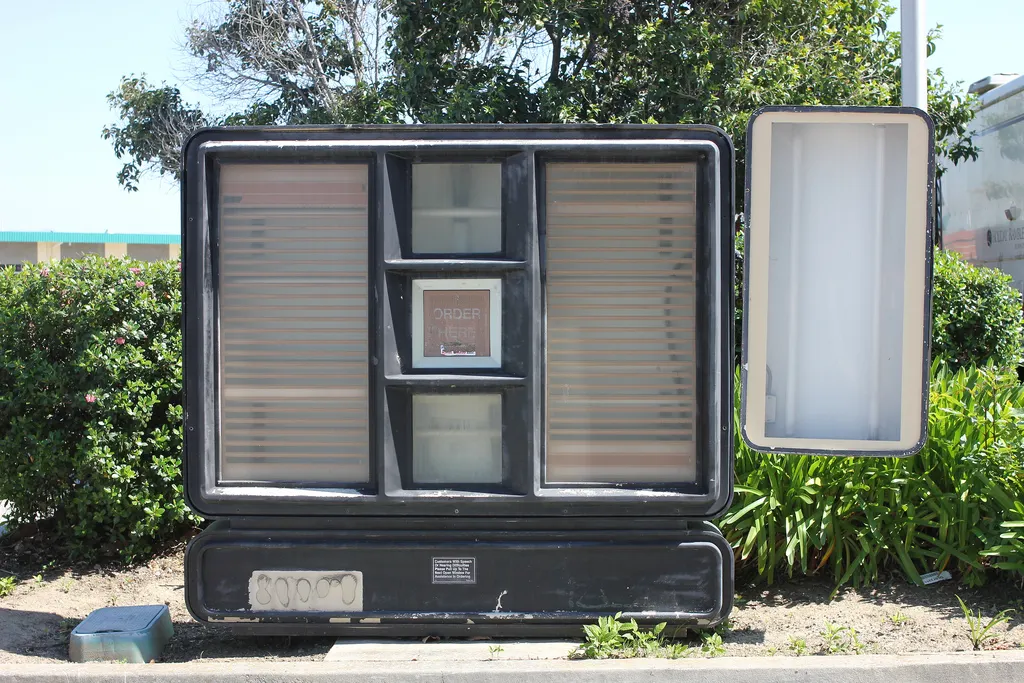
Upon entering the building (affectionately called “McMoon’s” by those who work within it) for the first time, I was greeted by familiar architecture. The drive-thru windows, menu light boxes, stainless steel counters, fiber glass tables and the ghosts of corporate brand ephemera all remain. However now they coexist under a jolly roger with a literal mountain of vintage 2-inch tape reels that contain trapped data, refrigerator-sized Ampex tape drives, an army of Mac workstations and a seemingly endless supply of analog tape decks, monitors, cables and soldering supplies.
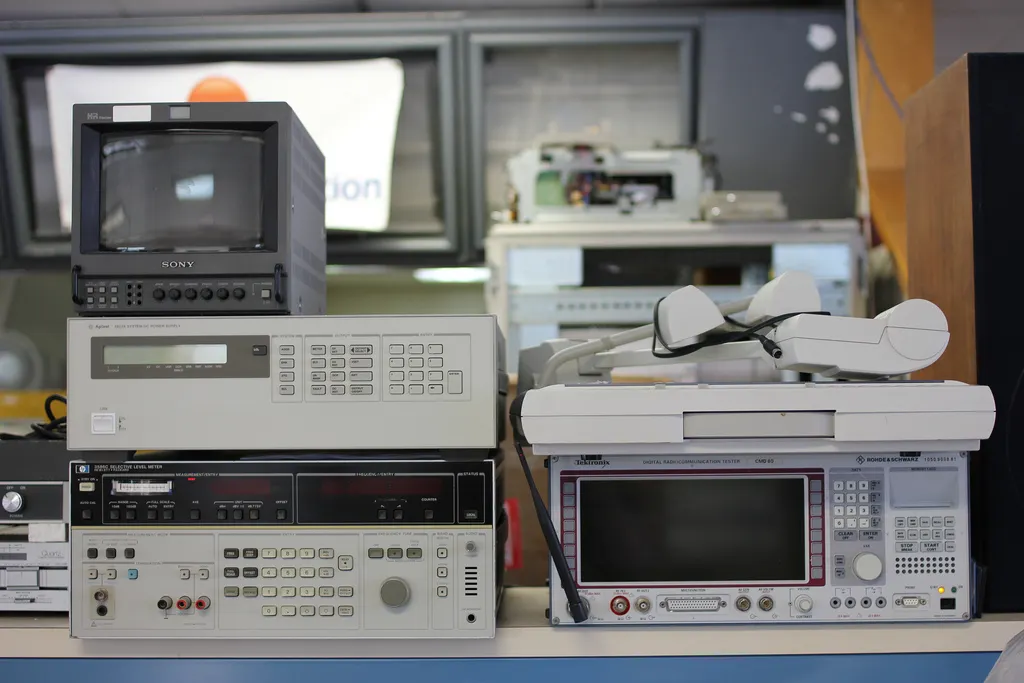
A recurring theme running through my discussions with LOIRP hackers was a concept they coined called techno-archeology. The success of LOIRP hinges on the group’s ability to free image data housed within the obsolete medium of 2-inch video tape.
In order to do this, they were required to excavate and replicate the processes and hardware utilized by technologists more than 50 years ago. We’re talking about an era in which the world’s largest super computer housed a fraction of the power our consumer laptops now possess. One might think today’s computing power would make this task an easy one, however the team is operating completely at the mercy of five-decades-old tech.
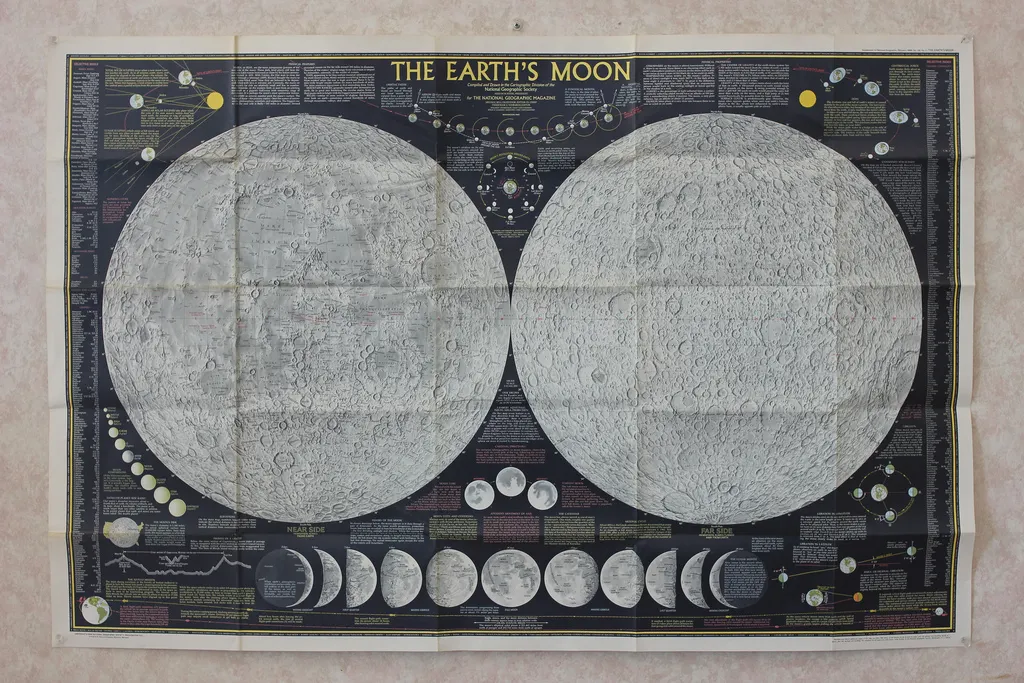
The LOIRP team at McMoon’s is doing some amazing work and I recommend anyone interested astronomy and technology check out what they’re up to. Big thanks to Dennis, Keith, Austin, Ken and Marco for hosting us.
If you enjoyed the photos in this post, you can see the full set over on Flickr. For now though, I’ll close with an image that isn’t mine. This Earth Rise image is one of my personal favorites of the lot recovered by LOIRP. Seeing this image in this ultra-high resolution makes me long for outer space with childish abandon. It also makes me realize just how small our place in the universe is.
The Singular Museum Experience
There have been several articles published in recent weeks assaulting the role technology has grown to encompass with respect to art museum visitor experiences. All of these pieces take a similar tack: mobile devices distract us from thoughtful looking; visitor photography of artworks does nothing to improve memory; when it comes to museum tech, less is more; something something the sky is falling.
These articles all share a nostalgia for and vehement defense of “the museum experience.” They propose that museums are supposed to be quiet contemplative spaces where people can reflect and intellectualize around objects without distraction or interruption from the outside world. Anything deviating from this scenario is inherently negative. While this may be true for some, it is undoubtedly not the case for others.
The fundamental flaw with these arguments is that they make the false assumption that a singular, one-size-fits-all museum experience ever existed in the first place. Considering that there is, and has been, only one correct way to experience a museum is extremely narrow-minded, experientially short-sighted and ultimately antiquated.
I would argue there is no such thing as “the museum experience.”
Perhaps now more than ever (thanks in part to technology), we are in a position to craft meaningful experiences for a wide array of museum-goers and open up these experiences to those who might never set foot inside our institutions. We can certainly honor traditionalists with minimalist thoughtful looking, but we should also provide the tools, access to information and social interactions that allows the born-digital generation to have relevant and meaningful experiences. I like to think of this approach as employing technology that disappears.
I also wonder if this issue is particularly time- or era-sensitive. In episode 11 of Museopunks, Beck Tench said something I feel is pertinent to this discussion:
We are living in two worlds now. The thing our grandchildren will find most quaint about us is that our generation makes a distinction between the physical and the virtual.
Because we’re living in this unique and transitional time, our task as museum technologists is complicated. We need to offer a multiplicity of experiences along an extended spectrum of digital comfort levels. If we don’t, our future constituents will move on, leaving museums behind for experiences that are more relevant and impactful for them. It is possible to honor the past while embracing the future, but it takes institutional open-mindedness and a willingness to acknowledge that, as visitors, we all need different things from our museums.
Museums as Digital Citizens
In preparing for our Museopunks @ MCN sessions, Suse and I have stumbled upon an area of investigation I think warrants some real thought. After discussing it briefly in a conference session brainstorming call, my mind has been racing ever since. Our conversation centered around the concept of digital citizenship, particularly if (and how) museums should be actively participating in a greater societal discourse and digital dialog. Should we — and by “we” I mean our institutions — be working to become better digital citizens?
Citizenship is traditionally thought to be an individual ideal, one that people take pride in possessing. Digital citizenship, albeit a new concept, also grips onto elements of individualism. Edward Snowden, Julian Assange and Anonymous hackers are likely the most famous digital citizens in recent memory, and although they definitely skew political, they jump to the front of my mind when thinking about citizenship in the digital capacity.
Notable activists aside, there is much more to digital citizenship than activisim. In fact, DigitalCitizenship.net cites nine individual elements of digital citizenship: access, commerce, communication, literacy, etiquette, law, rights & responsibilities, health & wellness, and security (self protection).
Could museum interactive experiences not only provide access to rich content, but also help increase the overall digital literacy of users?
Might we design our technology initiatives with an eye toward vision health or mitigating repetitive stress syndrome?
Why shouldn’t our digital projects travel parallel paths in pursuit of both curatorial mission and digital good?
Thinking about digital citizenship in these terms convinces me that institutions — museums in particular — are doing well, but could be doing better. Access is certainly important, and it seems to be the focus of most digital efforts. While opening up content, publishing collection data and releasing open-source digital resources are all important, so are actively pursuing the other eight elements outlined above.
We’re still solidifying the themes of the three (!!) Museopunks @ MCN sessions, but I hope this topic makes the cut. There’s a lot to unpack here and I’m looking forward to diving deep on this with some smart people.
What do you think? Is it possible for cultural institutions to transcend the singular ideal of citizenship and play a larger role in digital society? If so, what are some ways museums can become better digital citizens?
Technology That Disappears
Over the past few weeks, I’ve been working on some pretty intense projects at work in anticipation of big exhibition opening this weekend. One of the projects shipped today and I’m extremely proud of the work my team did to bring this concept from a loose idea to a delightfully useable thing.
The CMOA companion app is loaded with some interesting features, but my favorite one is likely the simplest. While visiting museums, I’ve often wished I had a bookmarklet or a “Read Later” service through which I could revisit and deep-dive on the works I personally enjoyed in the gallery. I regularly want to know more about a work or artist, but don’t want the multimedia/technology/screen viewing to penetrate into my gallery experience. Sometimes I just want to enjoy the art, you know? Color me a purist.
A few weeks ago I was talking to a colleague about this idea and he matter-of-factly said, “Why don’t you just write bookmarking functionality into the app?” And like that, we did. It’s a simple idea, but I think it’s going to be the feature people find the most delightful.
Throughout the development of the CMOA companion app, I realized we were making conscious decisions to omit sexy functionality in favor of truly useable and helpful features. This meant we often pushed the technology to the background, making it a vehicle or an agent instead of a focus point.
I find technology that disappears or recedes into the background — only to reveal itself when called upon — to be some of the most interesting work currently happening in the museum context. There is certainly a well-deserved place for multitouch/kiosk/fixture interactive experiences and focal-point tech in the museum world, but there is also a growing appetite for light-weight, understated, personality-infused gems. I hope those who are hungry for this type of experience find value in projects like the one we just shipped.
Gone Fishin'

I turn 35 today. As a birthday present to myself, I’m currently on a plane headed far away for some much needed downtime. In the coming days I will live completely off the grid. I will read books made from paper and I will avoid glowing screens. I might even try to make something with my hands. Don’t call, don’t email and don’t tweet. I won’t hear you.
Let’s reconnect on the other side, yes? Yes. Over and out.
The Perfect Television
This post is a riff on Koven Smith’s A Secret Thread From MW2013: Design and inspired by a John Roderick rant.
Over the course of the past six decades, technologists have been building the perfect television. Black-and-white and vacuum tubes have evolved into internet-enabled and on-board CPUs. Pixel density is high, profile depth is low and HDMI connections flow with zero latency. Colors are bright and surround sound systems throw down some mean bass. We control these perfect televisions from remote locations via mobile devices and we live our lives unconfined to program schedules.
But for all the effort we’ve placed on building the perfect television, we have very little to show for it with respect to viewing experience. From network broadcasting to subscription cable to online streaming services, there are hundreds of content channels/streams available to us. Perfect televisions deliver unending content yet nothing is worth watching. We’ve iterated on the infrastructure to such a heightened level, the experience of watching television has fallen off the radar and remains virtually unchanged from its inception in the 1950s.
A compelling experience – one that keeps up with the technological advancements of the infrastructure – has not been designed for us.
In a way, I think this is also where we are with respect to museum technology. Koven’s thoughts fall into perspective when we consider content management systems, collections databases and institutional strategy as infrastructure (the perfect televisions) that can be not only built upon, but designed upon in interesting ways. We can see these elements of experience design taking shape in some of the projects Koven notes in his brief, thought-provoking post.
Innovation is nothing new. Museum technologists, like their counterparts working within other types of organizations, have been innovating for decades. It’s exciting, though, to think we may be in the midst of #MuseTech version 2.0, where institutions can stand tall upon the firm foundations of prior work and look confidently toward intentionally designed experiences that captivate, fascinate and delight users at every turn.
Now, where did I put that remote?
The Perfect Television
This post is a riff on Koven Smith’s A Secret Thread From MW2013: Design and inspired by a John Roderick rant.
Over the course of the past six decades, technologists have been building the perfect television. Black-and-white and vacuum tubes have evolved into internet-enabled and on-board CPUs. Pixel density is high, profile depth is low and HDMI connections flow with zero latency. Colors are bright and surround sound systems throw down some mean bass. We control these perfect televisions from remote locations via mobile devices and we live our lives unconfined to program schedules.
But for all the effort we’ve placed on building the perfect television, we have very little to show for it with respect to viewing experience. From network broadcasting to subscription cable to online streaming services, there are hundreds of content channels/streams available to us. Perfect televisions deliver unending content yet nothing is worth watching. We’ve iterated on the infrastructure to such a heightened level, the experience of watching television has fallen off the radar and remains virtually unchanged from its inception in the 1950s.
A compelling experience — one that keeps up with the technological advancements of the infrastructure — has not been designed for us.
In a way, I think this is also where we are with respect to museum technology. Koven’s thoughts fall into perspective when we consider content management systems, collections databases and institutional strategy as infrastructure (the perfect televisions) that can be not only built upon, but designed upon in interesting ways. We can see these elements of experience design taking shape in some of the projects Koven notes in his brief, thought-provoking post.
Innovation is nothing new. Museum technologists, like their counterparts working within other types of organizations, have been innovating for decades. It’s exciting, though, to think we may be in the midst of #MuseTech version 2.0, where institutions can stand tall upon the firm foundations of prior work and look confidently toward intentionally designed experiences that captivate, fascinate and delight users at every turn.
Now, where did I put that remote?
The Punk and the Museum
Describing something or someone as punk can elicit a wide range of responses. It’s a polarizing term. From punk music to punk culture, it seems we all have different opinions about what punk is and whether or not we identify with it. I’d suspect most people have no strong association and remain indifferent to the term, while some likely despise it.
Those who despise punk culture credit its sloppy facade, affinity for anarchy and ruthless idealism as touchstones for their dislike. Others simply point to Green Day or spiked dog collars. Touché. These critiques are warranted in my opinion, but I view punk culture in a distinctly different light.
The punk philosophy has impacted me dramatically over the years and it continues to inform the way I approach nearly every aspect of my life, from fatherhood to professionalism. Let me explain.
Innovation on a Shoestring Punks often operate with little-to-no monetary or material resources. The ability to see different angles and make new, interesting things out of existing materials is of extreme value in the punk community. This forward-looking, innovate-at-all-costs approach has been a huge influence on contemporary society, including the modern hacker and DIY movements.
Speed Matters
Speed is a valued attribute in the punk community. Being perfect is good, but being first is better. One only needs to look to the imitation waves following the emergences of influential bands like the MC5 or Minor Threat or The Pixies to realize the significance of shipping early. The same goes for the technology innovators of today. Punk’s unique combination of speed and vehement originality differentiates it from all else.
Discomfort is Necessary
True innovation happens when artists and technologists operate with urgency and uncertainty. If a project I’m working on doesn’t make me just a little bit nervous, I know I’m doing something wrong. That pressure to make the thing work in the face of my unease drives the work to fruition, and powers the new and different. Routine inputs lead to routine outputs and punk culture frowns upon both.
We Stop at Nothing
Punks disregard money, time, status and possessions in pursuit of their passions. They follow their hearts to the ends of the earth to create their craft and it’s evident in the results. Often these projects are audacious and unconventional. Sometimes they take the shape of a song or an app or a robot. The remarkable projects, however, are always steeped with a noticeable passion. It’s in the fiber of the thing. You can sense it.
Authenticity is Paramount
People can tell when someone is faking it and merely throwing shapes. Punk culture is built on a foundation of authenticity and anything half-baked will be called out as such. Truth, honesty and compassion, along with authenticity and transparency, are keystones of the movement.
Punk drove its fangs into me as a teenager and has followed me ever since. It’s present when I talk to my kids about staying true to who they are in the face of peer pressure. It’s present in the writing on this website and in the writers I enjoy reading. It’s an elemental piece of my being.
It’s also present in my daily work at the museum. While I would never advocate for museum anarchism (okay, maybe this kind), I think museums as a whole benefit greatly from the growing sect of MuseoPunks who think differently, experiment freely, challenge preconceived notions and embrace the ethos of punk culture in their life’s work. While they may not self-identify as MuseoPunks (yet!), the community is coalescing around a growing number of progressive practitioners creating projects that push the museum sector forward in interesting ways.
MuseoPunks has a nice ring to it, don’t you think? More on that to come.
The Punk and the Museum
Describing something or someone as punk can elicit a wide range of responses. It’s a polarizing term. From punk music to punk culture, it seems we all have different opinions about what punk is and whether or not we identify with it. I’d suspect most people have no strong association and remain indifferent to the term, while some likely despise it.
Those who despise punk culture credit its sloppy facade, affinity for anarchy and ruthless idealism as touchstones for their dislike. Others simply point to Green Day or spiked dog collars. Touché. These critiques are warranted in my opinion, but I view punk culture in a distinctly different light.
The punk philosophy has impacted me dramatically over the years and it continues to inform the way I approach nearly every aspect of my life, from fatherhood to professionalism. Let me explain.
Innovation on a Shoestring
Punks often operate with little-to-no monetary or material resources. The ability to see different angles and make new, interesting things out of existing materials is of extreme value in the punk community. This forward-looking, innovate-at-all-costs approach has been a huge influence on contemporary society, including the modern hacker and DIY movements.
Speed Matters
Speed is a valued attribute in the punk community. Being perfect is good, but being first is better. One only needs to look to the imitation waves following the emergences of influential bands like the MC5 or Minor Threat or The Pixies to realize the significance of shipping early. The same goes for the technology innovators of today. Punk’s unique combination of speed and vehement originality differentiates it from all else.
Discomfort is Necessary
True innovation happens when artists and technologists operate with urgency and uncertainty. If a project I’m working on doesn’t make me just a little bit nervous, I know I’m doing something wrong. That pressure to make the thing work in the face of my unease drives the work to fruition, and powers the new and different. Routine inputs lead to routine outputs and punk culture frowns upon both.
We Stop at Nothing
Punks disregard money, time, status and possessions in pursuit of their passions. They follow their hearts to the ends of the earth to create their craft and it’s evident in the results. Often these projects are audacious and unconventional. Sometimes they take the shape of a song or an app or a robot. The remarkable projects, however, are always steeped with a noticeable passion. It’s in the fiber of the thing. You can sense it.
Authenticity is Paramount
People can tell when someone is faking it and merely throwing shapes. Punk culture is built on a foundation of authenticity and anything half-baked will be called out as such. Truth, honesty and compassion, along with authenticity and transparency, are keystones of the movement.
Punk drove it’s fangs into me as a teenager and has followed me ever since. It’s present when I talk to my kids about staying true to who they are in the face of peer pressure. It’s present in the writing on this website and in the writers I enjoy reading. It’s an elemental piece of my being.
It’s also present in my daily work at the museum. While I would never advocate for museum anarchism (okay, maybe this kind), I think museums as a whole benefit greatly from the growing sect of MuseoPunks who think differently, experiment freely, challenge preconceived notions and embrace the ethos of punk culture in their life’s work. While they may not self-identify as MuseoPunks (yet!), the community is coalescing around a growing number of progressive practitioners creating projects that push the museum sector forward in interesting ways.
MuseoPunks has a nice ring to it, don’t you think? More on that to come.
Experimenting with Open Authority
Nina Simon over at Museum 2.0 invited me to write a guest post about our current photography experiment Oh Snap! and why I think it’s successful when most crowd-sourced exhibitions and photo-response projects fall flat.
Big thanks to Nina for allowing me to hijack her most wonderful site.
Instinct and Intuition
Looking back, I can point to many turning points in my life. I consider these instances to be times of great influence and they carry immense impact on the trajectory of my life. More often than not, these moments have been stark absolutes — either this or that, on or off, zeros or ones — and required me to make active choices about my future and the future of those I love.
Within each of these choices may have been middle ground or ways that avoided absolutes, but I overwhelmingly chose to address these decisions in visceral, almost impulsive ways. Those words — visceral and impulsive — carry negative contexts for me, however. I like to think my decision-making process is based on instinct and rooted in intuition.
Instinct has guided me well over the years. For as long as I can remember, my intuition has been strong and it has rarely lead me astray. I’ve left school, quit jobs, embarked on spontaneous travel, married the love of my life, re-enrolled and finished school, shipped risk-laden and unconventional projects, and followed opportunities I wasn’t completely sure I could win or fulfill. All based on instinct.
This isn’t to say contemplation and deep thought have no place in my personal decisions. It’s quite the opposite, actually. Instinct takes over for me after deep thought and contemplation have brought me to a place of insight. Intuition leads me when that fork in the road appears and the only options are to go one way, or the other. Instantly, I feel it deep down in my guts and surrender to the inherent notion about which way is right. I’ll follow that primal directive every time.
Following instinct over analytics might not be the most appropriate approach from a business perspective, but I think it certainly has its place at the conference room table. Professional intuition is an important element in any workplace environment where innovation is a priority.
Personally though, I’ll stay with what’s historically worked for me. I’ll listen to my instinct as the horizon approaches and the next of life’s intersections draws near.