Category: Essays
Oh Snap!
This is a sneak peak at a cool project I’m developing at work. We have an exhibition of recent photography acquisitions opening next month and we wanted to experiment with ways visitors (on-site and online) can participate with the works.
We’ll be inviting visitors to respond visually to the works hanging on the walls. They will be able to submit a photo from their mobile device or workstation, and then that image will be posted to the web as photo response. Taking it a bit further, the photos will be printed and then hung next to the work that inspired the derivative. Pretty cool.
The best projects are those that blur the line between digital and physical.
This is also the most elaborate responsive site I’ve built to date. I look forward to sharing it with you when it’s ready. More to come.

The Greatest Threats Come From Within
Suse Cairns expounds upon her most dangerous idea about museums in the coming year: The greatest threats to museums come from within. On the surface this statement may seem pessimistic, but I feel the best part of the essay comes when Suse highlights the positive potential for the sector moving forward:
This is what I believe. We, as a sector, are in a hugely opportune place right now. We are incredibly well connected to one another, and to ideas from within and external to our own profession. A real energy has started emanating at many of the conferences I’ve attended. We drink about museums together, we talk, we share, and we work.
Social media, conferences, and the generosity of the people who work within the sector make it ever easier to forge strong relationships beyond the walls of our institutions, and hopefully also within them, and to share knowledge and vision with one another. Indeed, they also ensure that there are more ways than ever to speak to our audiences and communities, to invite them to be a part of our vision too. And this all gives us a strong position to build from.
I couldn’t agree more. The astounding passion and creativity and genius of the museum professionals I’ve had the pleasure of getting to know just in the past several months is jaw-dropping.
However, Suse is right. Insularity is the antithesis of progress. We need to look outside of the museum fishbowl for inspiration, collaboration and corroboration if we are to truly effect positive change within the sector. Adapting to shifting environments — be they technological, artistic, cultural or economic — is crucial, and we need to be embracing the examples of our counterparts outside the cultural sector.
Alternatively, we should be telling the stories of our own institutions on more complex levels. We need to share not just our own work, but also the work of others in the sector. We should be remixing the work of others, both inside and outside of the sector, and allowing for others to remix our own work. Innovation comes from the open flow of information.
It’s a great time to be working in a museum. I look forward to sharing some exciting projects from my own institution, as well as others, in the coming year.
Betterment in 2013
I struggle to understand the concept of the New Year’s Resolution. Every year, millions of people select an arbitrary date to start obsessively modifying lifelong behaviors and habits. They hedge their bets on a metaphorical flip of a switch and hope the current of willpower remains flowing in the face of temptation, vices and history.
Speaking from experience, it seems the game is rigged and the whole premise is setting us up for failure.
That said, the idea of personal development and productivity is near to my heart. Becoming better is something I think about daily. This year, however, instead of setting unrealistic goals to which I’ll fall short and, in turn, about which I’ll beat myself up, I’m identifying four focus areas of betterment in the coming year.
I am committed to fully pursuing these four directives in 2013 and beyond:
Be Here, Right Now
Pervasive technologies have their noted benefits, however they tend to take me out of the moment. They remove my focus from what’s right in front of me – the people I’m with and the tasks at hand. Starting today, I will make a conscious effort to remain present in the moment and dedicate my full attention to the people and things of importance before me.
This may involve disconnecting to an extent. Perhaps trimming the network. More appropriately, I think it may entail evaluating the limits and parameters to which platforms can claim my attention. Over the past few months, I’ve felt pulled apart by technology. Disjointed and off-kilter. I’ve made some small adjustments to address these issues, and will continue to modify this area of my life to reach a healthy balance.
Live Healthier
If we’re communicating freely here, I’ve let myself go in recent months. My hectic personal and professional schedules have all but eliminated any time for exercise or healthy eating. This needs to change. One year ago I was in the best shape of my life, on my way to running my first marathon. Then life took over and my health took a back seat to everything else.
I need to establish a system in which my personal health can assume a position of priority again. I have ideas about how this might be done and I’ll be enacting some of these tactics today. I’ll enact more tomorrow.
Create More
A few weeks ago after eating Chinese for lunch (see above), I received a fortune that read, “We are not here to merely exist. We are here to create.” Recently, my creativity has been exclusively professionally-channeled. The (lack of) activity on this site and the quiet end of the ZenGeek Podcast are a testament to that fact.
The fact is I’m extremely passionate about museums and technology. That won’t stop and I’m excited about a number of professional projects slated for 2013. I hope to infuse that passion into this site more than I have in the past.
I also believe creating outside of my professional track is very important. Creativity breeds more creativity. I hope to utilize my personal and professional creative streams to inform the other as a way of making new, interesting things.
Finish
Finally, I need to finish. I am an extremely great starter. I have some pretty good ideas and I start them with enormous enthusiasm and vigor. Just count the domains in my registrar account’s renew queue.
I am the worst finisher. Horrendous. Abysmal, even. I will work to change that in the coming year by saying “no” more than I have in the past and following through on these betterment focus areas.
I will track my progress throughout the year and measure my success. If you’re all open to it, I will share updates with you and perhaps dive a bit deeper into each of the four directives when the time is right and the data warrants it.
For now, though, I will enjoy a quiet end to this year. I will cherish the love of friends & family, and I’ll wake tomorrow ready to start attacking these goals. Happy New Year to you and yours.
Flickr is Dead. Long Live Flickr.

I created my Flickr account in March of 2005. It was relatively early in the image sharing platform’s lifespan and right around the time Yahoo! paid big bucks to bring Flickr within its portfolio of web services. At that time, Flickr was a revolutionary tool primarily used by bloggers to host and share photos.
Over the years, Flickr’s feature set became more robust. A passionate community of users circled around the platform and I counted myself among them. They embraced the concept of user privacy and pushed forward with progressive copyright by integrating Creative Commons licensing in its nascent stages. Flickr was on top of the Web 2.0 world.
Then something happened. The web exploded with competing platforms that were focused on making it easier for users to share information. The iPhone was released and the mobile revolution was underway. “Social Media” had arrived and platforms were predicated on innovating at rapid rates.
Innovation at Flickr, however, ceased. Lured by compelling experiences and growing user bases elsewhere, many loyal Flickrists migrated away to Facebook or Twitter or Instagram. The writing seemed to be on the wall for the once-great, now-stagnant service. Fearing the worst, I backed up my entire photostream and let my Pro Account expire in January of 2010.
I spent the next three years going about my business on the web without even a thought toward Flickr. Until this week when an update to Flickr for iOS was released to positive reviews.
Feeling nostalgic for my glory days of the web, I downloaded the app to see what all the fuss was about. And the fuss, in my opinion, is justified. With one fell swoop, Flickr has injected itself back into the conversation of web relevance. It’s not about the inclusion of Instagram-like photo filters or location services. Those features are great, but hardly leading edge. What makes this update so great is the combination of these features with a refreshed user experience, Flickr’s outstanding respect for its community of users and the promise of continued innovation from the platform.
This is all good news and exciting for someone who never really wanted to say goodbye. Needless to say, I’m back. It’s been great getting reacquainted with Flickr over the past few days and reconnecting with the community there. I’m curious to see where Flickr goes from here. New leadership at Yahoo! and a newfound energy are positive indications they’re moving in the right direction. That’s great to see.
Related: My friend Daniel Incandela’s take on the new Flickr
Not Real-Time
Joshua Gross exploring the idea that the future of the web is not in real-time information flow:
The real-time web is a bit like a fire hydrant—either the valve is opened or closed, but there’s no filter to stem the flow; we become the filter for the massive flow of information. Content should always feel like a gift, not a burden. To turn it into a gift, we need to start focusing on ways to control the flow.
Agreed. To me, the future of the web is a better filtering system — a way to dictate what, how and when desired information makes its way through input channels. The future has yet to be written, but I think it’s in making sure meaningful content gets where it’s supposed to go in a way that’s dictated by the user. The plumbing, if you will.
Timeliness is good, but timelessness, relevance and control are better.
On Museums and Professional Callings
I can clearly remember the first time I set foot inside a museum. I was seven years old and it was with my second grade class on a field trip to the Franklin Institute in Philadelphia. I remember the building’s gigantic scale and the timeless nature of the artifacts on display. I remember the smell and the echo of the lobby. I remember leaving with more questions and curiosity than I had when I entered.
In the years since, my personal interests have skewed decidedly toward the arts, but my love affair with museums never left. Instead of becoming awe-inspired by dinosaurs and dioramas, I came to appreciate the delicate touch of paint on canvas, the intricate dance of melodies and harmonies, and the creative process as a whole. I will visit any museum anywhere and spend hours soaking it all in.
Not too far along into my professional career I was lucky to land a technology gig in a mid-size museum here in Pittsburgh. I made a lot of friends and took calculated risks with respect to technology and communication. I felt my work at that museum held meaning because it was helping tell compelling stories about dynamic artists and their work. We had a lot of fun along the way too. I looked forward to going to work each day in a creative environment surrounded by artistic expression.
I left that position in 2010. The story behind my decision to leave is complex and better suited for another blog post, but in short I moved on to a wonderful job in higher education at a university known the world over for its innovation. For the most part, all was well in my professional world.
Then I started to hear the calls. They started as daydreams of a blank white cube open for experimentation, but quickly progressed to visions of working full-time again in an environment surrounded by art, artists and creativity. I quickly realized how much I missed being immersed in a place of art and culture. The museum was calling me, just like it did on that spring Philadelphia day back in 1986.
This week, I acted on this calling by accepting a web and digital media position at the Carnegie Museum of Art, one Pittsburgh’s cultural gems and an international beacon of artistic excellence. The museum has a rich history and is strategically poised for great things down the road. There are some amazing projects on the horizon. I’m extremely excited about this next chapter in my professional life and I look forward to making new friends, as well as reconnecting with my museum colleagues across the globe.
That’s not to say I’m not nervous about this transition. The butterflies are certainly present. A wise woman once said, “If an opportunity scares you, you need to take it.” Change of this magnitude always comes along with an element of unease. However, I’m comforted in the fact that working in the art + tech space is my professional calling. I truly believe it’s what I’m supposed to do.
My experience during the past few weeks has shown me many things, but most importantly I’ve rediscovered how to follow my instincts and pursue the calling that is within me. My situation isn’t special, though. Callings are within all of us. You just have to listen and act.
Juxtaposition
Two years ago today, I experienced the saddest day of my life. It was a day I will never forget and a situation I hope no one else ever has to live through. Alternatively, eight years ago tomorrow, I experienced the happiest day of my life. It too was a day I will never forget, but in this case I truly wish everyone has a chance to feel the love that surrounded me on that day back in 2004.
Any time a juxtaposition of extreme emotions is compacted into a turbulent timeframe, it creates a great deal of internal tension for us. For me, these 48 hours embody a great conflict. I consistently find myself questioning the appropriateness of my feelings. How can I be simultaneously happy about this one thing and so very sad about this other thing? Why am I letting this cloud of negativity cast its dark shadow on my brilliant memories of pure joy? In all honesty, I don’t have the answers.
What I do have, though, is a vital macro-view of this 48-hour window — the ability to step back and analyze its essence. Through this window, I see the ebb-and-flow of the universe captured in a sort of time-lapse. This juxtaposition shows me the importance of mindful balance and non-attachment. It shows me that lives can be irreversibly altered in an instant and that nothing in this life is permanent. It wrangles up and presents to me the complete spectrum of all the possible feelings and emotions that exist in this world. It swallows me in an ocean of thought where tides bring and take without judgement.
This juxtaposition has taught that the past and the future do not exist. There is only this moment; there is only now. Nothing more and nothing less. Realizing this, I’ve learned to cherish every waking moment. I drink in my surroundings and live fully and completely in the present. I hold my friends and family close, and make sure they know I love them.
Only by living this way can I weather the most violent of juxtapositions and remain in a place of complete peace.
Emails to My Unborn Daughter

There’s been a lot of talk lately about email. The majority of this recent writing has been about Google’s acquisition of Sparrow, a much-heralded Mac and iOS email client. Bloggers, tech pundits and average dudes are waxing philosophical about the health of the independent developer community, sustainable business models and the relevance of email itself. Good times.
There’s no denying that email is broken. Some are writing about its inherently flawed nature and obsoleteness, while others are making things in an attempt to fix it.
Spoiler: This post is also about email. It’s about email in its most basic state, irrespective of the client or vendor. It’s about potential. It’s about privacy. It’s about the promise of an agnostic platform in an age of proprietary prairies.
Let me explain.
For the past five years, I’ve been writing emails to my son. Shortly after he was born in 2007, I created an email account in his name so I could write to him throughout his childhood and then turn the account over to him when he was of age. Upon opening the account for the first time, he’d be greeted with an archive of his childhood as seen through his father’s eyes.
To date, I’ve sent him a wide array of messages ranging from short one-sentence emails just to let him know I love him to photos of special moments we’ve shared together to diary-like entries that chronicle his developments and our family’s journey together. Our daughter is due to arrive later next month, and I just created an account for her, now that we’ve decided on her name. I sent my first email to my unborn daughter last night.
Why Email?
So why email? Why not a private Facebook page or maybe a shared Evernote notebook? For me, the answers are simple. Ownership and privacy. I want to ensure ownership of the content stays with my children and that the content remains private. I’m talking about privacy in the simplest sense of the word here, not the kind of privacy networks like Facebook lead users to believe is the new standard.
Yes, I understand email can be hacked and messages can be leaked. I don’t believe total information security exists, so given the alternatives, email seems to be the least of all evils. Once content leaves our brains and becomes formalized in the ether, be it in a Moleskine journal or online, the concept of total and complete security flies out the window.
The idea here is that I want this content to exist for my kids in the long-term — when they turn 12 or 14 or 16 or whatever age is appropriate to start tooling around on the internet. Hell, my kids may look at email the way I looked at my Dad’s bell-bottoms when I was 14 and want no part of it. The point though, is that my notes will be available should they desire to access them. And I think they will. They’re good kids.
A lot of users are placing a lot of faith in Facebook and Twitter and Squarespace at the moment, but who ultimately owns the content published on those respective platforms and where will that record of life moments be in five, fifteen or twenty-five years? I’d wager that email will still be around in some form. Facebook? Not so much. Good luck exporting that content from a walled garden.
For all the flack email has been receiving lately, its value is proven. Sure, it’s a pain to manage professionally and inboxes are exploding with spam and bacn for many. Efficiently managed, though, email can be a beautiful thing. Email can be a living portal to years of moments — all indexed, timestamped and contextual.
Dude’s Day
I took my son to a local amusement park the other day. Just the two of us on a “Dude’s Day,” as we like to call these excursions. The amusement park was hosting a Superhero meet-and-greet, where kids could meet Spiderman, Hulk, Thor and Captain America. My son is a huge superhero fan, so he was naturally excited. We were both looking forward to this time together for days leading up to the event.
What surprised me, though, was this: As we waited in line to meet the first hero, he asked if I could take his picture and send it to his email. In that moment I realized that he understands what I’m doing and wants to be a part of it. He’s excited and eager to have access to these notes down the road. I think that’s super cool and it makes my effort worthwile.
Email isn’t perfect. Nothing is. But in this instant, and for this purpose, it’s the most appropriate tool for the job.
You Shall Know Google by its Trail of Dead
Sean Gallagher at Ars Technica on Google’s acquisition of Sparrow:
Like most Sparrow users, the news caught me off-guard; the application had recently been updated in Apple’s App Store, and the latest version had widened its performance lead on Apple’s Mail.app and other Mac OS mail software. But the update turned out to be a final act instead of a prelude to something bigger—and the bow was an undisclosed payday for Leca and Kima Ventures, the French venture capital team that originally backed the company. This is the sort of exit that’s become common to software and Web companies in the current economy, where the only way to get the big payout is to be acquired by a Google, or a Facebook, a Microsoft or an Apple.
I use Sparrow on my desktop and iOS. I absolutely love the application. Sparrow makes email bearable for me, so this is naturally disappointing news.
It’s hard to fault Dom Leca and the Sparrow development team for making the choice to sell out, just as it’s hard to question the decision of Instagram brass to be absorbed into Facebook. What’s disturbing to me, though, is the unstable user environment created by such acquisitions.
I expect such developments when dealing in free apps and lottery ticket business models. It’s harder to stomach when it happens to a shop generating healthy revenue under a viable business strategy. No one saw this one coming.
When you’re hungry, make fire.
For three weeks, my family has been living without a kitchen. We are in the middle of a complete remodel that involves taking the walls down to the studs and the floors down to their joists. This project not only impacts our kitchen, but also the adjacent dining room. The heart of our home has been rendered unusable. While progress is being made, it is slow due to the complicated nature of many moving parts.
The kitchen, when complete, will be wonderful. In the interim, though, we are living with a refrigerator in our family room and our dining set — with all associated plates, glasses and kitchen supplies — filling our guest room. Our family routine has been eradicated and we have become very resourceful when it comes to preparing food and sharing family meals.
In a way, I feel like we’ve been camping in our own home. We don’t want to succumb to the unhealthy lure of convenience sold by TV dinners and fast food, so we’ve meticulously been planning our meals to fit our busy schedules. We’ve gotten creative with ingredients and resorted to an outside grill to cook mostly everything.
If it’s raining at dinner time, I cook in the downpour and try to notice each falling drop as it strikes me.
Living without normal modern amenities, however temporary, is a healthy wake-up call. Sometimes I think we become numb to the concept of convenience. Hot? Turn on the A.C. Need a gallon milk? Jump in the car and drive a few miles to the store. Need directions? Google it on the go. These are the times in which we live.
Technology promises progress, and with that comes convenience. But when technology and convenience are removed from the equation, we are left with same problems — problems that can be equally answered using lowest-common-denominator solutions. Sometimes the answer is so simple.
When you’re hungry, make fire.
Thoughts of My Father
I’m up early on this Father’s Day. The house is quiet with sleep and the rising sun is starting to cast sharp shadows in my back yard. It is peaceful.
In a matter of minutes, my son will likely rise and be excited to begin our day together, a day that will see a range of activities from fishing to laser tag. My thoughts in this quiet moment, however, fall not on my own experience of fatherhood, but rather on memories of my father.
This is my second Father’s Day without dad. While I think about him every day, certain days are harder than others. Birthdays and holidays are persistent reminders, but today — a day dedicated to the special love of a father — has come to be the hardest for me.
My dad was the kind of guy who would do anything for a friend or member of the family. He was so funny and playful, and had a good time no matter what he was doing. He was a random gift-giver, some amazing and impactful (my first guitar at the age of eight) and others slightly missing the mark (Christmas 1995: the frilly pirate shirt).
Dad was always looking to help. He would spend hours at the drop of a hat helping me fix something in my house or teaching me a useful skill that would get me out of a jam down the road. He built crazy things — lo-fi inventions — that served a purpose no commercial product could provide. He was a life hacker before there were life hackers.
My father also taught me about honesty and respect. He showed me through his actions the importance of hard work and always telling the truth, even if the truth was unpopular. Later in life, we fell on opposite sides of the political spectrum and our debates taught me how to have spirited conversations with the people who don’t agree.
He was able to singularly occupy that unique space of teacher, mentor and friend.
Dad was one-of-a-kind. And while he is dearly missed, I’ll take this day to reflect on these fond thoughts of my time with him. I’ll tell my son all about him and share some of my favorite memories.
Even though he’s gone, dad still guides me. When I find myself in uncertain situations I catch myself thinking, “What would dad do?”
That eternal guidance is the trait of someone special. Knowing this, I will continue to push forward (that’s what he would do) and work tirelessly toward becoming half the man he was.
The Nova Scotia Summer
I remember it being dark. Not eyes-closed dark, but complete absence-of-light dark. And cold. The unforgiving brisk that only the Nova Scotia summer can deliver. The pre-dawn chill cut straight through my coat down to my shaky, scattered bones.
We gathered in clouds of breath and the blinding glow of headlights as we prepared for our ascent. We were all here — some rested after an early night to bed, some having never slept, others the victims of that 4am in-between state of asleep and awake. The not-so-nuclear family. I had sick-to-my-stomach nerves, but I tried keep cool.
Sometimes letting go is harder than hanging on.
As we caravanned the winding stretch of road the passengers remained silent. Words were somehow not appropriate. Out of place, if anything. Memories instead filled the van with a web of thoughts words could never penetrate. The road winded and stretched upward to the cavernous hole that was the night sky. We were getting closer.
Up and up we rode until the trees got small and the lavender air became so pure it took my breath away. The night had almost expired. We didn’t have much time. Hurried and tentative, we found our place facing east. Eyes on the emerging horizon.
At first sight of the distant ribbon of light, my brother and I, forever bonded by our duty, stepped forward and released two souls back into the universe. This was their wish.
As the minutes passed, the sun raced toward us with furious velocity. It sprinted across the water and jumped the shoreline with reckless abandon. When it hit the mountain’s base I felt the wind shift toward our tearing cheeks. The line of demarcation grew closer and the brilliant angles of light met our tired eyes head-on.
The wind now took my breath away. Blinding bursts shot across the east-facing cliff like wartime bullets of hate. But there was no hate here. We became enveloped in the new day’s light, a blanket of bright comfort to strengthen us for the days and years to come.
As we emerged, we found ourselves in a place calm. A place of peace. A place of acceptance. There were no more tears. There were no more thoughts of sadness. There was only love.
Sweet, beautiful, warming love.
The Nest
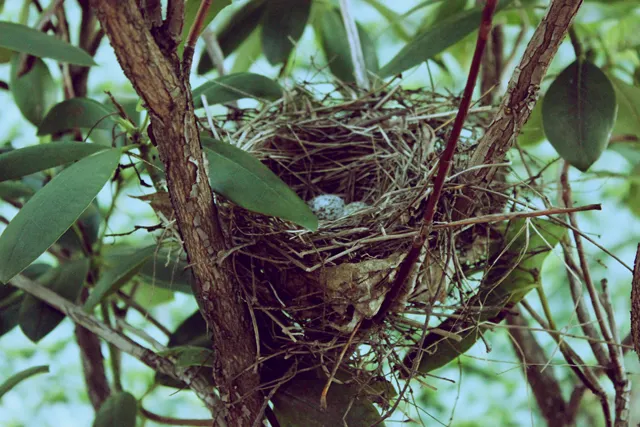
It’s early and I’m still half-asleep. I’m in the midst of my morning coffee protocol when I suddenly catch movement out of the corner of my eye. A brown blur with a crest of red, she moves in fits and bursts delicately forming a bowl of earth and straw outside my window.
The days have just gotten longer and we are approaching our dodge with the sun. She is preparing; she is making a home.
Days pass and I watch her create this nest. Every now and then, she’ll catch me peeking out the window and stop for a moment. Our eyes lock and then release with an unspoken agreement that neither wishes the other harm. She is meticulous, as many mothers are with matters of the family. She works tirelessly for the future, flying nameless random patterns in search of material to craft her bed.
They’re coming. I can feel it.
I awake the next morning to find some additions to the nest. Three ocean-tinted, speckled, chalky eggs have arrived overnight. The mother is proud, there’s no question. In an instant she’s gone from scavenger of building supplies, to protector of her fragile packages. She settles in and incubates.
For several days, the mother stays with her eggs. A trait of protection, she only leaves for seconds at a time. The weather has also turned cold. She has become the furnace.
Each morning, coffee in hand, I peer out the window to see if our new flock has arrived. And each morning the mother sits in silence. She eyes me with the same look my mother used to have. “Patience,” she conveys. Just when I thought the shells were in penetrable and void of life, I notice new movement in the nest.
The first egg has hatched. With beak inverted toward the sky, the new chick greets the world with an open mouth. She is hungry for her first meal and anxious for her siblings to join her. The mother is absent, but only for a moment until she returns with some nourishment for the babe.
I almost consider taking the day off from work to watch the other two eggs hatch, but several meetings are scheduled so I have to leave. Several times that day, in those very meetings, I catch myself wondering if the triad is complete. When I arrive home that night, I find it to be.
Three perfectly fragile baby chicks. They were all beak and full of cute.
The next couple of days pass and the chicks grow slightly bigger with each sunrise and cup of morning coffee. As they get stronger, their chirping grows louder. They are now fully capable of elevating their heads above the nest. The peek left and right, but ultimately end up back in the all-too-familiar position of beaks in the air, mother providing. When she isn’t feeding, she continues to warm the home.
As the chicks grow, I imagine watching as they emerge from the nest with fresh feathers and take that unpredictable leap into flight. I imagine them soaring with beaky smiles and playing like flying children would.
But that would never be the case.
I’m not sure how many days it was after the chicks arrived that I came home from work to find the nest disheveled and disturbed. No chicks. No mother. There had been an incident. There had been a struggle.
“Hello? Mr. Inscho? There’s been an accident.”
I won’t let myself imagine or consider the circumstances that took the chicks away from this world, just as I can’t dwell on the darkness in areas of my past that are filled with loss and despair.
Sometimes life has plans other than our own intentions. We are only passengers.
What I will do, though, is hold close the way our eyes met during those first few days and the connection we experienced in those quiet morning moments. I’ll cherish the opportunity to be a part of this mother’s dedication to her family and I will forever remember my vision of them flying off into the powder blue sky.
We Are All For Sale
If we learn one thing from the Facebook – Instagram merger, it should be that we are all for sale and there is no such thing as FREE. These services we use every day are not free services. When we do not directly pay for a service with real money, we pay for it with our data. We pay for it when we broadcast our location, social graph and our status updates.
In the case of yesterday’s acquisition, we are the product being sold.
Facebookization of the masses has caused a morphing of social norms where sharing has become the default. This is obvious to many, but it doesn’t have to be the reality. In order for real change to take place, the curtain of “free service culture” must be lifted through a tipping point of user awareness.
Let’s Break It Down
We are all for sale. Just yesterday, I and 30 million other users were sold for about $33.00 each – a brilliant move for the Instagram folks. Regardless of whether or not this was a smart and strategic business move for Facebook, the reality is this: The images, location data and platform activity of all current and future Instagram users now have a new owner. This new owner happens to be a company I do not personally trust. Therefore, my user account and data are no more.
Maybe you’re completely comfortable with this acquisition. Maybe you don’t care. That’s fine, but you should at least be aware of what’s happening with your data. Often times, the concept of faux-free overshadows the reality that these services are profiting from our activity. While it is the nature of our times and it’s not going away, it should be out in the open.
High profile deals like the Facebook/Instagram acquisition can help with awareness, but with payoffs north of nine zeros they can also create an environment of copycat strategies. How many social startups now have the goal of becoming the next Instagram?
A Plea to Developers
I loved Instagram. The application lived in prominence on my Home Screen. I wrote about how it supplanted the native camera on my phone and I would have happily paid for the service. I’d wager a good portion of the user base, in some capacity, would have as well.
Developers of the next Instagram: please give users the opportunity to directly support your service by paying for it! Please take our money! Please have a sustainable business plan, or better yet, a platform philosophy!
Some platforms are doing it and it’s working. Look at Pinboard. Look at 500pixels. Look at Instapaper. All thriving with a paying user base. It’s time for us, as empowered users of technology, to start following the money.
The Instagram team would have been foolish to turn down a billion dollars. People play the Mega Millions for a reason. They play for a chance to win big. And winning big is a very rare occurrence. Facebook offer removed, Instagram could have leveraged their active user base to earn millions of dollars year over year had they pursued a sustainable revenue stream.
A lottery ticket is not a sustainable business practice.
In Praise of an Amateur Approach
There was a time in my life when I aspired for expertise and the notoriety that came along with it. Early on in my career, I read lots of books about best practices (whatever that term means); I attended professional development workshops led by marketing experts who shared tips, techniques and best practices (there’s that term again); and I worked tirelessly toward developing a knowledge base I hoped one day would lead others to describe me as an expert in my field.
As I look back, these goals were extremely misguided. My efforts payed off, though, and the phone started ringing off the hook with invitations to speak about my work. I traveled far and wide to conferences and universities and meet-ups, waxing technological along my way to becoming a sharer of practices, best or otherwise.
This was all well and good until I realized what really made my work special and why people wanted to hear about it. Quite simply, I was not the expert people thought I was and the projects I created were not templated best-practices. Rather, they were playful experiments that valued humans over technology and meaningful connections over metrics.
In the early days of participatory and/or social media, there were no experts (and I would argue there still aren’t). We were all flying by the seats of our pants in an exciting, reckless and lawless wild west now known as the Internet. I was lucky to be one of a small group of rogue non-profit technologists who formed a kind of professional collective, regularly swapping war stories about projects that worked out well, in addition to projects that ultimately crashed and burned. This neo-collaborative environment fostered a freedom to experiment in a space without limitations. It was extremely conducive to producing uniquely creative work.
We ignored marketing metrics and built initiatives that flew in the face of the newly emerging, self-inflicted gurus. On paper, the projects shouldn’t have been effective, but they were. We were operating in new territory — one that had no textbook, let alone textbook author.
Upon realizing I was no expert and the projects garnering most attention were essentially public experiments, I became extremely conflicted wearing the costume of an expert. Who was I to speak authoritatively about these emerging technologies?
Asking myself hard, inward looking questions caused my professional world-view to change overnight. I stopped accepting offers to speak about my projects, in favor of sharing my experiences with those who have specific questions. To this day, I’ll happily discuss my work with people who are interested or readers who email, but I will never again put myself in a situation that delineates between expert and non-expert. I’m happy to forever consider myself an experimenting amateur.
There is something to be said for approaching one’s work from the perspective of an amateur. They operate with curiosity, openness, and an undeniable aire of possibility. There are no limits to their creativity and ingenuity is engrained within them. Amateurs participate in activities for the simple joy of doing so, not for a paycheck. They ignore rules and are not intimidated by failure.
Just consider the progress that has emerged from ignoring rules and popular conventions. We would be without innovations like Post-It Notes, Corn Flakes, the Pace Maker, Penicillin and countless others were it not for free experimentation and happy accidents. I don’t place my work on the same pedestal that these developments stand upon, but I do feel the best projects are those that force us to adapt to new paradigms and think differently about our environment.
Experts, on the other hand, thrive on stable existence. They live inside convention, measurement, regulations and best practices. With respect to technology, experts believe their methodology is the stuff of authority — a prescription for replicated success — which is rarely the case and often times not.
I think it’s important to differentiate between a lack of expertise and a lack of desire for information. These could not be more different. While amateurs do not possess unparalleled expertise in a subject, their thirst for knowledge about the subject cannot be easily quenched. To an amateur, there is always something more to learn.
In my personal practice, I continue to employ an amateur approach. It’s why I hash out crazy ideas like this here on the site. It’s why I only work with partners who embrace this philosophy. It’s why I admire other people making crazy unique work in the space and invite them to be guests on the podcast each week. I want to know more. I want to grow as an artist. I want to soak it all in. While not an expert at anything, I am hungry for experimentation and greedy for the fantastic.
And that’s enough for me.
Smaller. Slower. Less.
Bigger, better, faster, more. These are the benefits technology promises us. They are promises of the future. A commitment toward progress.
Larger hard drives with ever-growing capacity appear in shiny new devices at every turn of the product cycle. Information flows at a rate that makes many feel as if they are wrapping their mouth around the end of a fire hose. We celebrates excess at a level never before experienced in western culture.
Our television screens have more surface area than our dining room tables. We walk around with pocket-sized personal computers that provide unlimited information at our fingertips, yet we no longer remember phone numbers. And thanks to GPS navigation, we have no idea where we’re headed until we’re well on our way.
Bigger, better, faster, more.
We suffer from elephantiasis of advancement. And we continuously crave even more. More friends. More disk space. More followers. More apps. More page views. More “Likes.” More pixels. More channels. More downloads. More data. More features.
More caliber per capita.
Bigger, better, faster, more. Of these four words, only one is truly qualitative.
Many believe we’re better off thanks to technology. I would be foolish to deny the progress made possible through technological advancement. Diseases have been cured, disasters have been reported and dictators have been overthrown, thanks in great part to technology. Those are all amazing things. I’m sure thousands of similar examples exist proving the benefits of advancement.
But what about us? Is technology making us better as human beings? I’m not so sure, but I suppose that depends upon your subjective definition of better.
Experiment: if you live or work in an urban or suburban area, take a look around you the next time you’re walking down the street or at the mall. Take note of the number of people staring at a mobile device. The next time you are in a café, count the number of people with a laptop accompanying their latté. There is now a generation that knows only the connected way of life. The attached life.
And I’m as guilty as the next person.
I have a difficult time believing the attached life is the better life. It is impossible to avoid the digital aspects of modern society, however non-attachment and the practice of living in the present can cooperate alongside digital culture. If we reject technology’s promise of excess; renounce the ideas of bigger, better and more; and focus on our own personal concept of what better is (and should ultimately be), we can live in harmony with technology.
Smaller, slower, less. And better. Those are the ideals to which I am working.
Running in Silence
I am a runner. I can say that today with confidence, but it wasn’t always so.
When I started running just over a year ago, it was a struggle. I’ve always considered myself to be in relatively good health, but I wasn’t the most athletic person. I was active, but not an athlete. Plain and simple, in the beginning, each stride was painful. A fifteen minute light jog was nearly unbearable, torture even.
During those early days, when I was fighting hard to finish an exhausting three-mile run, my personal motivators were largely technology-based. I brought my phone along with me on those cold winter wars to fire music into my ears that powered my feet to keep moving, step after step, mile after mile. I tracked my progress with Runkeeper, a GPS-enabled application that measures mileage, pace, calories burned and a slew of additional metrics. Runkeeper’s sultry-voiced narrator would occasionally chirp distance and pace updates into my earbuds, letting me know just how far I had gone, and how much farther I had yet to go.
With consistency came comfort. As the runs became easier, I upped my distance to include one long run per week. This caused my outings to last longer, sometimes longer than 90 minutes. On these longer runs I listened to a regular rotation of technology podcasts from the 5x5 and 70 Decibels networks.
While the music, tech musings and automated metrics kept my mind from focussing on the discomfort my body was feeling, I also discovered that this constant connectivity (even while in the middle of the woods on a trail run) was keeping my mind from appreciating my surroundings in those moments, following an exploratory train-of-thought around professional ideas and concepts, or simply experiencing the silence and patterns in my breath.
The technology had created a barrier. I was distracted, no longer fully aware and I became more interested in outcomes, results and metrics, than process.
Realizing this, I made the decision several weeks ago to eliminate technology during my runs. No music, no podcasts and no Runkeeper updates. I would leave my phone at home and become one with my path and my thoughts.
On my first run without technology, I remember noticing the discomfort was gone. I was several miles into the run and feeling fine. I let my mind wander to any thought that entered it and I explored those thoughts without limits. I was aware of the nature surrounding me and I was in tune with my breathing.
Distance didn’t matter. Pacing didn’t matter. Alternatively, my experience during the journey mattered. Process mattered.
Since embracing the silence during my runs, I’ve had a lot of time to think about Static Made (as a whole) and specific client projects in a setting that’s completely removed from a display screen. Pondering technology in the absence of it is liberating. It’s been refreshing and has allowed me to develop creative ideas in a way not inherently tethered to technology.
The lesson for me here is this: technology should never be a tether, but rather the vehicle through which tethers are cut. Outcomes are definitely important, but the process of exploration should enjoy equal footing. The process is journey to the desired result and space in which you can create without limits.
On Authenticity and Remarkability
For almost as long as I can remember, I’ve been enamored with artists who operate with authenticity and create work that I consider to be remarkable. It started early on for me with the likes of Fugazi, the beat poets and Jean-Michel Basquiat. During the pre- and early-Internet days it seemed like there was no shortage of musicians, writers and visual artists who were creating work of staggering genius. It took a great deal of effort on my part to discover, but that effort was worth it to me because the work was remarkable.
Since then, the Internet has taken hold. And due to the creative paradigm shift spurred by the web, I’ve found it difficult to discover post-Internet artists of the same authentic and remarkable caliber. While the benefits of the connected world (democratization of media, the enabling of real-time publishing, etc.) are regularly touted, I feel these same benefits are also the fundamental detriment of the world wide web.
The signal-to-noise ratio is completely inverted. There is too much collective and regressive output. Everything is instant and temporary. Meme culture and SEO and pay-per-click and the incessant self-promotion that comes along with the premise of social media is drowning out the amazing art I’m sure is out there. Somewhere. Beneath the din.
I am not alone in this view. Writer JD Bentley feels the same and is taking action. He writes in his fantastic essay, Our Secret Handshake is Not an Algorithm:
Mediocrity reigns supreme, the noise exceeds the signal, the best are drown out by the loudest because being loud is much easier than being remarkable. While sites of the past felt like secret clubs which demanded a secret handshake (that human connection), today’s sites are often mass-produced marketing nonsense, their secret handshakes being nothing more than an effortless algorithmic assumption on Google’s servers. It is this with which I’m fed up.
Quite a statement. And Bentley is walking the walk. He’s pulled his site from search engines, removed all social sharing features and is relying solely on reader referrals to grow his audience base. This emphasis on quality vs. quantity allows him to completely focus on his mission: Making remarkable art.
As someone who’s intimately involved at the intersection of mission-based messaging and new media, this approach is so refreshing. I’ve written about digital authenticity in the past. It’s something I’m borderline-obsessed with. I’m constantly thinking about ways to honestly, innovatively and authentically connect with audiences. It always boils down to the mission. Everything is driven by the mission. Aspire to be true with your message, not loud.
I’m excited to see a writer like JD Bentley take this step and I hope more artists and mission-driven organizations follow suit.
Word of the WeeK - Enthusiastic
Now I feel really old. Elliott brought home his first-ever homework assignment. The word of the week at preschool is enthusiastic and he was tasked with completing several statements describing how it feels to be enthusiastic. Jilly transcribed verbatim, but all the responses came straight from his mind.
When I am enthusiastic my eyes… feel loose. When I am enthusiastic my mouth… smiles. When I am enthusiastic my tummy feels… really loose. When I am enthusiastic my muscles feel… like they are jumping. When I am enthusiastic sometimes I… jump, dance and fall. These things can make me feel enthusiastic… the zoo, Chuck E. Cheese, hanging up Christmas decorations, computers and Dylan. When I am enthusiastic I can calm down by doing this… take a deep breath.

Back in the Saddle Again
Some of you may know that I lived a previous life as a songwriter and musician. Almost a decade ago, I gave up the recording and touring life for one that fosters stable relationships and is conducive to raising a family. During the past ten years, I’d pick up a guitar every now & then, or sit down at the keys whenever there was a piano around and play some songs. But that’s about it. And honestly, I didn’t miss it at all. Other things had taken music’s place in my life.
But yesterday I was invited to play some music with A Generous Act, a group of amazing musicians who are writing and recording an album here in Pittsburgh. I threw out a rough idea I had for a song and within an hour it had evolved into a beautiful tune with three-part harmonies and a building, transformational sing-along outro. The tentative title is Sound Came Falling. If it ends up making the record, I’ll be over the moon and will definitely post it here.
It felt really good to create again and I think this experience might be the shot in the arm I need to begin writing again. Thanks, A Generous Act.
Conversations with a 3 Year Old
ELLIOTT: Dad, did you get fired? ME: No. Do you know what “getting fired” means? ELLIOTT: Yeah, it’s what happens when you talk a lot at your job. Instead of doing work. ME: Daddy didn’t get fired. I resigned. ELLIOTT: Oh. What does “resigned” mean? ME: Resigning is the polite & courteous way to leave a job. ELLIOTT: Can I resign from school?
Day Two in Havana
This post originally appeared on the Pittsburgh Post-Gazette’s blog. That blog has since been deleted, but the original context is viewable on the Internet Archive Wayback Machine.
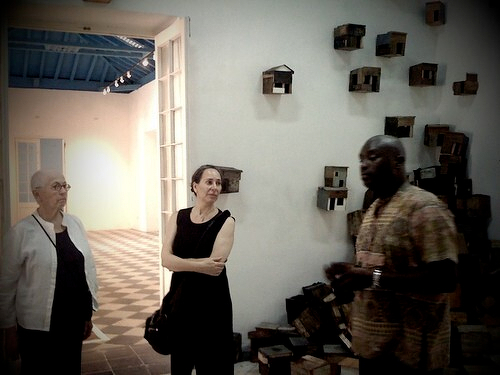
For our first full day in Havana, we wanted to get over to the Centro Wifredo Lam as early as possible to see how installation was going and meet in-person the artists we’ve primarily been dealing with via email. The Center is located just a few blocks from our hotel, on the Plaza de la Cathedral. We arrived to the sound of furious hammering and the hustling atmosphere that occurs two days out from an exhibition opening.There was a bit of confusion actually getting into the center, as our collective Spanish is horrible and the museum workers at admission did not speak any English. After a few minutes of trying our best to communicate, we heard a booming voice come from behind us, “You are from the Mattress Factory? I am Diago! Welcome!”
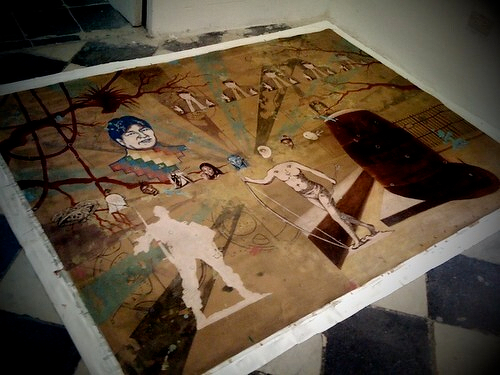
Juan Roberto Diago is one of the artists in the Queloides exhibition, but he prefers to go simply as Diago. Barbara and Michael had met him before on a previous visit to Cuba, but it was a first meeting for the rest of us. He was the perfect initial tour guide to the galleries of the Wifredo Lam Center, whose 3 floors of gallery space are sprawling in 360 degrees around an open-air courtyard that doubles as a sculpture garden. Diago energetically led us from room to room where canvases were being stretched, works were being installed, and empty rooms were beginning to resemble a fantastic art exhibition.
Needing to get back to his work of preparing his installation, Diago handed us off to Jorge Antonio Fernandez Torres, the Director of the Centro Wifredo Lam. Jorge gave us a behind the scenes tour of the facility, including the administrative offices, and then we chatted for a while around a conference table surrounded by black and white images of the Center’s namesake.
After exploring the galleries a bit more, we decided to let the artists and staff of the Centro Wifredo Lam get back to work. The show is going to be great and I’m very excited to see the Center full of people on Friday evening at the opening.
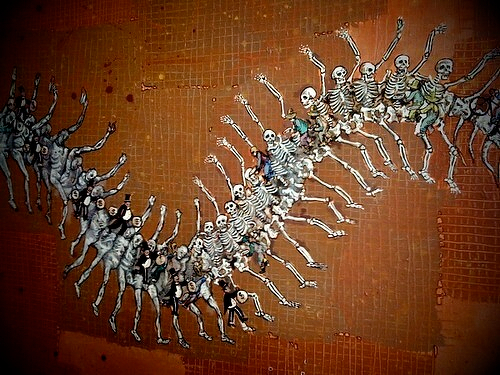
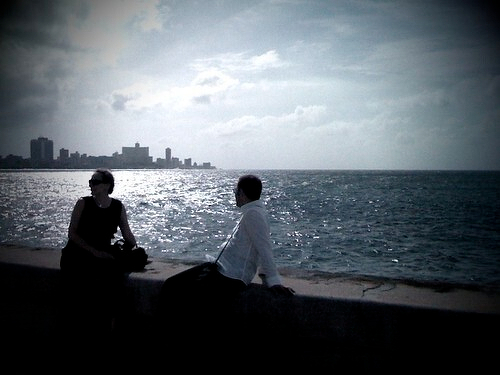
We took the rest of the afternoon to explore Havana on foot. Some highlights were the National Capitol, Chinatown, a locomotive graveyard containing dozens of rusted out steam engines (most were from Pennsylvania!), some interesting street art, and a walk along the Malecon, a boardwalk-style path that wanders along the north coast of the city.
Wheels Down Havana
This post originally appeared on the Pittsburgh Post-Gazette’s blog. That blog has since been deleted, but the original context is viewable on the Internet Archive Wayback Machine.
We’re here. Our flight arrived on time at the Havana airport to beautiful weather. Low 80s and blue, sunny skies. We scooted through customs after a moderate amount of questioning and jumped in a taxi to make our way to the hotel.
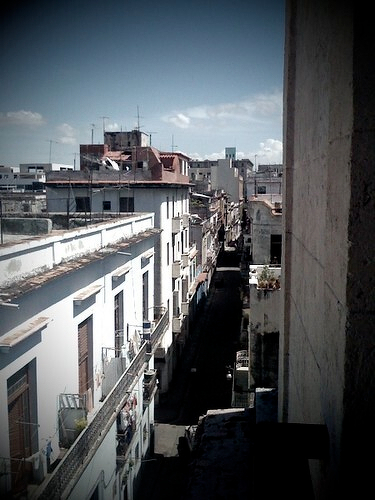
The landscape immediately surrounding the airport is rural and open. But we soon found the population growing more dense and the buildings growing taller. The next thing we know, we’re in the heart of Havanna, passing monuments to the revolution and the Capitol. A few minutes later, we arrived at our hotel, located in the Habana Viejas (Old Havana). This is a very interesting neighborhood - a unique mix of circa 1500s and modern architecture, residential and commercial, wealth and poverty.
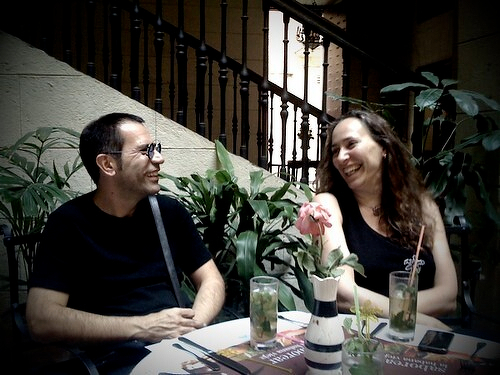
Not having eaten anything since the early morning in Toronto, we were all very hungry. The restaurant in our hotel is located in an open-air courtyard in the center of the structure. We enjoyed a late afternoon light lunch and our first Mojitos.
After some nourishment, we hit the streets to take in some sights before our dinner meeting with Elio, Rene and Alexis (three artists in the Queloides Exhibition - more to come on all the artists tomorrow). The amount of art and culture in this city is astounding. Everwhere you look there is culture. My eyes were darting from side to side just taking it all in.
Noticing the time, we needed to head back to the hotel for our dinner appointment with Elio, Rene and Alexis. An evening of fantastic conversation followed. Plans for today: Visit the Centro Wifredo Lam to document artists installing. More to come tomorrow!


Gas gloves, Queen Street and Dim Sum.
This post originally appeared on the Pittsburgh Post-Gazette’s blog. That blog has since been deleted, but the original context is viewable on the Internet Archive Wayback Machine.
The drive to Toronto was great. As we got on 279 North toward Eerie, all three of us basically said in unison, “Wow. What a day for a road trip.” The sun was shining brilliantly and the road was almost ours alone. Conversation centered around to-do items on the Cuba check-list (museums and art, the Hemingway House, a trip to the beach to name a few), a discussion of the popular attraction to outlet mall shopping, and observances of nature as we passed through the western Pennsylvania and New York countryside.
We stopped for lunch at Azteca, a Mexican restaurant in Dunkirk, New York. It was good. MF Lesley can vouch for us – she’s from nearby. After enjoying our burritos and quesadillas, Claudia threw me the keys and I got behind the wheel. But before jumping back on I-90, we needed to get gas. I only bring this up because the gas station we pulled up to offered plastic gloves to wear while pumping so your hands didn’t end up smelling like gasoline. This was the first any of us had seen anything like this. This Dunkirk-area custom is a very nice touch. Owen was appreciative.
Then it was through Buffalo and across the U.S. / Canadian border. We met up with Barbara, Michael and Hilary a few hours later on Queen Street in Toronto. There were some really great antique shops, boutiques and restaurants along this strip. It reminded me a bit of South Street in Philadelphia. We cruised around Queen Street for a bit and then made our way to the Bright Pearl, a fantastic Dim Sum restaurant in nearby Chinatown.
After feasting on Dim Sum (something the culinary community of Pittsburgh lacks – let me know if I’m wrong, any places in the ‘Burgh to get good Dim Sum?), we all realized we were exhausted so we made our way back to the hotel to catch up on email, call our families and write blog posts.
This morning we’re off to Havana. Hasta luego!
And they're off
This post originally appeared on the Pittsburgh Post-Gazette’s blog. That blog has since been deleted, but the original context is viewable on the Internet Archive Wayback Machine.
As of 9:30 AM this morning, we’re headed north toward Toronto. Barbara, Michael and Hilary left bright & early to get a good jump on some culture & shopping north of the border. Claudia, Owen and myself, always in favor of a few extra minutes of sleep, are traveling in a separate vehicle. Exactly who will control the stereo on this trip is yet to be determined. However, one thing’s certain. A loaded iPod and a day full of sunshine make for good road trips.
After crossing into Canada this afternoon, we plan to meet up with the rest of the group at our hotel. Hopefully, the schedule will permit some exploration of Toronto before our flight to Havana Tuesday morning. More to come from our neighbor to the north this evening.